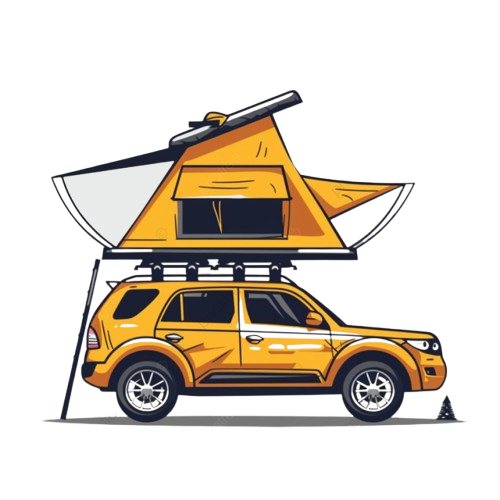
Land at Entebbe, have your 4×4 handed over at your hotel or an airport, and drive Uganda’s gorilla, chimpanzee and big-game parks yourself, with the owner, a mechanic and a contact person in one WhatsApp group from the first day of your trip.
- From $100 a day, in US dollars. All eight vehicles in our fleet can be arranged for pick-up in Uganda. A pick-up / drop-off fee applies by location, so ask for yours when you request a quote.
- Delivered to you at your hotel, your Airbnb or an airport, with a full handover briefing and an inventory checklist.
- Cross-border trips into Rwanda, Kenya and Tanzania are possible with our prior written approval, a valid COMESA Yellow Card and cross-border fees. Comprehensive insurance applies, with a hirer excess of up to $1,000.
[WhatsApp us: +254 703 367441] [Request a quote]
Rated 5.0 on TripAdvisor from 22 reviews and 4.7 on Google from 21 reviews.
On this page: Support · Quick facts · Entebbe or Kampala · Roads and parks · Permits · Wet season · Driving tips · Camper Cruiser · Fleet and prices · Rental terms · Borders · Reviews · FAQ
Published by 4×4 Self Drive Cars for Hire. This guide draws on trips customers have driven with us, including a Uganda trip with gorilla and chimpanzee permit help and a one-way Entebbe to Arusha route. Road conditions change with the rains, so check with us for your dates.
If something goes wrong in Uganda: how our support works
The first question about self-driving in Uganda is not about the vehicle. It is what happens when something goes wrong a long way from help, in a country where you have never driven.
Our renters describe the answer in almost the same words, review after review. It comes down to four things.
- A WhatsApp group from the first day of your trip. We create it when your trip starts. In it: you, the owner, the mechanic and a contact person. A question, a photo of a warning light or a location pin goes straight to the people who would act on it.
- The vehicle comes to you. We do pick-up and drop-off at airports, hotels and Airbnbs, for a pick-up / drop-off fee that depends on the location. In Uganda that means Entebbe, Kampala and your hotel.
- A proper handover. Reviewers mention a thorough briefing, an inventory checklist and a demonstration of the rooftop tent before they drove away. Bring your route and your questions. This is the time to ask which stretches worry you.
- Reasonable efforts to repair or replace. Our rental terms say that after a genuine mechanical breakdown that you did not cause through negligence or misuse, we make reasonable efforts to arrange a repair or, where operationally feasible, to provide a replacement vehicle. Reviewers describe what that has looked like: one had a mechanic from our network come out to their location near Nanyuki, Kenya, and another wrote that the team went the “extra mile” tracking them down en route to fix even minor things on a one-way trip from Entebbe to Arusha.
What we do not promise. We do not promise a response time and we do not promise a replacement vehicle. Our terms say that response times depend on location, accessibility, border restrictions and vehicle availability. A flat tire on the Masaka highway and a stuck vehicle on a Bwindi sector road are different problems with different arrival times, and a replacement depends on what is operationally feasible. What the group removes is the search for a phone number and the job of explaining where you are to a stranger.
What the terms ask of you when something goes wrong:
- Check engine oil, coolant, tire pressure and dashboard warning lights regularly, and report a warning light or a mechanical concern promptly. Failing to report one can make you liable for the damage that follows.
- Tell us immediately about a breakdown, a mechanical issue, a warning light or accident damage.
- Do not repair or dismantle anything without our authorization. In a genuine emergency a nearby mechanic may help, but contact us before any repair begins. Unauthorized repairs, tampering or replacement parts are at your cost.
- After an accident, theft or damage: notify us immediately, notify the police within 24 hours, obtain a police report or reference number, photograph the scene, all vehicles involved and the damage, collect witness and third-party details, do not admit liability without our authorization, and secure the vehicle. Not following these steps can affect your insurance.
If a mechanical failure costs you a day. If a confirmed mechanical failure that you did not cause leaves the vehicle unusable for 10 hours or more within a rental day, the daily rental amount for that day may be refunded. We are not liable for accommodation, missed activities, transport delays, third-party bookings or consequential losses, apart from the exceptions written into the terms. So leave a buffer day before any fixed date, such as a gorilla permit.
Three habits that make the group work for you:
- Drop a location pin in the group when you leave the paved road for a park road, and again when you arrive. Mobile coverage in forest valleys is patchy, and the pin tells us where you were the last time you had signal.
- Tell the group where you are sleeping each night.
- Report an odd noise or a pull in the steering the day you notice it, not at the end of the trip. The mechanic is in the group for exactly this.
Self-drive Uganda at a glance
| Driving side | Left. Rwanda, next door, drives on the right. |
| Pick-up and drop-off | Entebbe, Kampala, your hotel or Airbnb. A pick-up / drop-off fee applies by location. |
| Daily rates | $100 (Camper Cruiser with roof tent) to $230 (7-seater with driver included). All eight vehicles can be arranged for pick-up in Uganda. |
| Included in the rate | Comprehensive insurance (hirer excess up to $1,000) and free camping gear for 2 |
| Drivers | At least 23 years old, a valid driver’s license carried at all times, and at least 2 years of driving experience. Only drivers named in the Rental Agreement may drive. |
| Security deposit | USD 1,000 or EUR 950, paid before collection. Cash is preferred, because card fees are heavy on $1,000 and an international bank transfer is slow and costly to reverse. Card or Pesapal is possible on request, with the card fees paid by you. |
| Fuel | Supplied at about a quarter tank. Return it at the same level. |
| Speed limits | 80 km/h (50 mph) on highways, 50 km/h (31 mph) in towns, 30 to 40 km/h (19 to 25 mph) in national parks |
| Night driving | Prohibited from sunset to sunrise without our prior written approval |
| Cross-border | Rwanda, Kenya and Tanzania with prior written approval, a valid COMESA Yellow Card and cross-border fees. Tell us before your booking is confirmed. |
| Permits | We help with gorilla and chimpanzee permit and park entry bookings. Permits and their prices are set by UWA. |
| Our time zone | East Africa Time (UTC+3, no daylight saving): 7 hours ahead of New York in summer (8 in winter), 1 hour ahead of Paris and Berlin in summer (2 in winter) |
| Contact | WhatsApp or call +254 703 367441 · info@4x4selfdrivecarsforhire.com |
More detail on each of these is in Rental terms.
Entebbe airport pickup or Kampala: where to start your self-drive in Uganda
Entebbe International Airport sits on Lake Victoria, about 40 km (25 miles) from the center of Kampala. On a clear road that is about an hour. In rush-hour traffic it can be a lot more. We also hand over vehicles in Kampala itself, but Entebbe is where most overseas travelers actually land.
Our advice for a first-time visitor: do not drive out of the airport on the night you land. Intercontinental flights often arrive late in the evening or in the small hours. A long flight, jet lag, left-hand traffic and Kampala’s roads is the worst combination on the whole trip. Instead:
- Sleep your first night in Entebbe, which is quiet and close to the airport.
- Take delivery at your hotel or Airbnb the next morning, after breakfast. Hotel and Airbnb delivery is how we normally work.
- Do the handover and briefing while you are awake: the inventory checklist, the rooftop tent demonstration, your route, your questions.
- Spend the first hour driving the quiet streets of Entebbe to get the left-hand habit back before you head west.
Collect at the airport only if you land with plenty of daylight left and feel fresh. Airport pick-up and drop-off is available for a pick-up / drop-off fee. Our rental terms prohibit driving between sunset and sunrise unless we have approved it in writing, so a late arrival is a reason to sleep first, not to rush.
Start in Kampala if you are already in the city. Be realistic about it: Kampala is not the place to practice left-hand driving. If your route heads west, ask us which way out of the city we would take at your departure hour. There are bypass roads around Kampala, and the best choice depends on the time of day. If the city is your base, see our page on 4×4 self-drive cars for hire in Kampala.
Finishing the trip. Bwindi to Entebbe is a full day of driving, roughly 9 to 10 hours, so leave at sunrise: night driving is prohibited without our written approval. Never plan it for the day of an evening flight. Sleep your last night near Entebbe and return the vehicle to the airport or your hotel the next morning.
One-way hires. With hubs in Kampala, Kigali, Nairobi, Arusha and Mombasa, one-way routes are possible. One reviewer drove one way from Entebbe through Rwanda to Arusha, crossing two borders in 21 days. A one-way hire that crosses a border also needs the written approval, Yellow Card and fees described under Borders.
Uganda by 4×4: distances, drive times and what the roads are really like
Uganda’s headline parks are in the west and north-west of the country, and the main highways to them are paved. The surprise is how much of the real driving happens on the last stretch before each park: murram (red clay and gravel) that is fine when dry and a different road when wet.
All figures below are rounded planning estimates from Kampala unless stated. Rain, roadworks and slow trucks change them.
Plan with our speed limits, not with the quickest vehicle on the road. Our rental terms cap speed at 80 km/h (50 mph) on highways, 50 km/h (31 mph) in towns and 30 to 40 km/h (19 to 25 mph) inside national parks. At 80 km/h, 400 km (250 miles) takes five hours before a single stop, and night driving is prohibited, so a long leg has to start early.
| Leg | Distance | Typical drive time | Road |
|---|---|---|---|
| Entebbe airport to Kampala | 40 km (25 mi) | 1 to 3 hours | Paved, congested |
| Kampala to Murchison Falls (Paraa) | about 305 km (190 mi) | 5 to 6 hours | Paved to Masindi; park roads vary |
| Kampala to Kibale (Kanyanchu) via Fort Portal | about 350 km (215 mi) | 5 to 6 hours | Paved |
| Kampala to Queen Elizabeth (Mweya) via Mbarara | about 420 to 460 km (260 to 285 mi) | 6 to 8 hours | Paved to the park; park tracks are murram |
| Mweya to the Ishasha sector | n/a | about 2 to 3 hours | Park and rural roads, muddy after heavy rain |
| Ishasha to Bwindi (Buhoma) | n/a | about 3 to 5 hours | Murram; can become impassable in heavy rain |
| Kampala to Kabale | about 420 km (260 mi) | 6 to 8 hours | Paved |
| Kampala to the Bwindi sectors | about 500 to 550 km (310 to 340 mi) | 8 to 10 hours | Paved to Kabale or Rukungiri, then murram |
| Kabale to Lake Bunyonyi | short hop | under 1 hour | Paved, then a local road |
| Kabale to the Katuna/Gatuna border (Rwanda) | about 30 km (19 mi) | about 45 minutes | Paved |
A route that makes geographic sense runs clockwise around the west: Kampala, Kibale, Queen Elizabeth, Ishasha, Bwindi, Lake Bunyonyi, then back toward Entebbe or on into Rwanda. Murchison Falls is a separate northern branch that adds roughly 2 to 3 days. On the Kampala to Murchison road, Ziwa Rhino Sanctuary is a natural stop, and Murchison to Kibale is about 6 hours of driving. The Kampala to Masaka highway crosses the Equator before Masaka, an easy place for a break.
Bwindi Impenetrable Forest: the drive to the trailheads
Bwindi has four gorilla trekking sectors: Buhoma in the north, Ruhija in the east, and Rushaga and Nkuringo in the south. Gorilla permits are normally tied to a trekking sector, so choose the sector first and the route second, and check the terms printed on your own permit.
- The highways to Kabale and to Rukungiri are paved. The last stretch into each sector is steep, narrow murram with sharp bends and clay that turns slick in rain.
- Arrive the evening before your trek, before sunset. Trek briefings generally start early in the morning at the sector headquarters, and you do not want to start that day with a mountain drive. Our terms prohibit night driving without written approval, so the arrival day has to end in daylight.
- Do not plan a long transfer on trek day. A gorilla trek can take under an hour or most of a day. You will be wet, muddy and tired when it ends.
- Fill the tank in the last big town (Mbarara, Kabale or Rukungiri), at a recognized station such as Shell, TotalEnergies or Rubis. Services inside the sectors are limited.
- Expect patchy phone signal in the forest valleys. Send your location pin to the WhatsApp group when you leave the highway and when you arrive.
Queen Elizabeth National Park and the Ishasha tree-climbing lions
Queen Elizabeth is really two parks. The northern part around Mweya has the Kazinga Channel boat trips and the Kasenyi plains for game drives. The southern Ishasha sector is remote and famous for lions that rest in large fig trees through the middle of the day. Sightings are common but never guaranteed.
- Ishasha is the natural link between Queen Elizabeth and Bwindi: you can go from lions to the gorilla forest in a single day. The road between them is the one that gets worst in heavy rain, so ask us about its condition before you commit in March to May or October to November.
- A pop-up roof lets you stand and photograph from inside the vehicle without opening a door next to a lion.
- At Mweya, hippos graze on land at night. Sleeping in a roof tent keeps you off the ground, but you still do not walk around in the dark.
- If you are coming from Kibale, the road from Fort Portal through Kasese to Mweya is the easier, paved link.
Kibale Forest: chimpanzee tracking
Kibale, near Fort Portal, is Uganda’s best-known place to track chimpanzees on foot, with the main tracking base at Kanyanchu. The drive from Kampala via Fort Portal is on paved road, which makes Kibale one of the easiest parks in this guide to reach by self-drive. It is the natural first stop on a western loop, and a gentle place to shake off the first days’ left-hand nerves. Chimpanzee permits are issued by the Uganda Wildlife Authority (UWA), and we help with the booking (see Permits below).
Murchison Falls and the Nile crossing at Paraa
Murchison Falls is Uganda’s largest park, split by the Nile. The savannah on the north bank is reached by crossing the Nile at Paraa. Older guides, and some pages that still rank for “Murchison ferry”, describe a vehicle ferry there. The arrangement may have changed since they were written, so do not plan a day around the crossing until you have checked the current situation with us and with UWA.
- The north bank has the open savannah: giraffe, elephants, buffalo and lions. Boat cruises run from Paraa upstream to the base of the falls and downstream toward the Nile delta, a good area for shoebill storks.
- Clay tracks on the north bank are slippery after rain. A real 4×4 matters here too, not just at Bwindi.
- Fill up in Masindi, the last big town before the park.
- Coming from Kampala via Masindi is the straightforward route.
Lake Bunyonyi
Lake Bunyonyi sits at roughly 1,950 m (6,400 ft) in the hills outside Kabale, and it is the right place to rest after Bwindi. It lies between the gorilla forest and the Rwandan border. Nights at that altitude are cold enough to need a proper sleeping bag, so ask us about the warmth rating of the bedding that comes with your vehicle.
Gorilla and chimpanzee permits: how they work and what we do
Permits are issued by the Uganda Wildlife Authority (UWA), not by us, and they shape the whole trip.
- A permit is tied to a named person and a date, and for gorillas normally to a trekking sector. Everything else in your itinerary, including the vehicle pickup, moves around the permit dates, not the other way round. Check the terms printed on your own permit.
- Permit prices are set and revised by UWA, so we do not quote a number here. See the current tariff for foreign non-residents on the official UWA website (ugandawildlife.org). Park entry fees are set by their authorities in the same way.
- Rules on who may trek (minimum age), how many visitors can join a group and how long you spend with the animals are UWA’s, and UWA can change them. Read the current rules on the UWA website or in your permit paperwork before you book.
- Permits for the dry months tend to sell out first. Book permits before you book anything else.
What we do. Gorilla and chimpanzee permit and park entry booking assistance is part of what we offer, and a reviewer’s Uganda trip with us included gorilla and chimpanzee permit help. Send us your preferred dates, how many people will trek, the sector you would like, and the names on your passports. Extra deposits may be required for permits (see Rental terms).
What we do not do. We do not hold permits in stock and we cannot promise a date. If your preferred day is sold out, UWA decides what is available, and we help you pick the next best arrangement.
If you cancel a permit. Permit cancellations follow UWA policy, as set out in our terms:
| Cancellation period | Refund |
|---|---|
| 91 or more days | 70% |
| 46 to 90 days | 50% |
| 9 to 45 days | 25% |
| 0 to 8 days | none |
Why a real 4×4 matters on the Bwindi approach roads in the wet season
Uganda has two rainy seasons, roughly March to May and September or October to November, with drier periods from December to February and June to August. The rainforest around Bwindi gets rain in any month; that is why it is a rainforest.
| Months | What it means for driving |
|---|---|
| December to February | Drier. Best road conditions in the west. Busy: book permits and vehicle early. |
| March to May | Long rains. Heaviest conditions on the Bwindi sector roads and the Ishasha road. 4×4 is non-negotiable. Allow extra driving time. |
| June to August | Dry and dusty on murram. Peak season for gorilla permits. Game viewing is good because animals concentrate near water. |
| September to November | Short rains build. Roads turn slick again; green and quieter. |
What happens on a Bwindi approach road in the wet: the murram becomes slick clay on steep gradients, the ruts get deep, and a two-wheel-drive or crossover vehicle slides or stalls. The roads are often one vehicle wide, so a stuck car blocks everyone behind it. In the wet months we treat a 4×4 as non-negotiable for the Buhoma, Ruhija, Rushaga and Nkuringo approach roads. In the dry months ground clearance still matters because of rocks and ruts.
Wet murram technique that works:
- Engage four-wheel drive and low range before a hill, not once the wheels are spinning.
- Keep a steady momentum uphill, and use engine braking in low range on the way down. Hard braking on a clay slope is how vehicles slide.
- Stop and walk any bad stretch first. Look at where the ruts go.
- Do not drive through water deeper than 30 cm (about 12 inches). Our terms prohibit it, and water damage is excluded from insurance. Where a stream or flooded rut covers the track and you cannot judge the depth, stop, ask the group and be ready to turn back.
- Reach the final stretch well before sunset. Murram in fog or at dusk is a different road, and our terms prohibit night driving without written approval.
- If you get stuck, stop spinning the wheels and post a pin in the WhatsApp group before you dig deeper.
At handover, check the spare wheel, jack and wheel spanner yourself, and ask to see the low-range lever demonstrated, even if you have used one before. Improper use of the 4×4 system is an insurance exclusion, so this is not a formality.
Driving in Uganda for the first time: Kampala traffic, boda-bodas and other hazards
Left-hand traffic. You drive on the left in Uganda. Roundabouts, junctions and overtaking are where right-side drivers make mistakes, particularly in the first days. Rwanda drives on the right, so you switch again at that border.
Transmission. The Landcruiser VX, 76, 78 and 79 Series are manual. The Camper Cruiser and the Safari Van are automatic. Many American drivers have never driven a manual, and learning on the other side of the road in Kampala is a lot to ask. If that is you, ask for an automatic.
Drivers and licenses. Under our rental terms every driver must be at least 23 years old, hold a valid driver’s license that they carry at all times while driving, and have at least two years of driving experience. Only drivers named in the Rental Agreement may drive, and unauthorized drivers are not insured. Bring your passport as well.
Kampala traffic.
– Rush hour is roughly 7 to 9:30 in the morning and 4 to 8 in the evening, and Kampala’s hills turn every jam into a crawl. Leave early or wait.
– Do not use Kampala as a place to practice. If your route does not need the city, go around it.
– Use an offline map or a navigation app with a local SIM. Kampala’s side streets are not forgiving of a wrong turn.
Boda-boda (motorcycle taxi) hazards. For most first-time drivers these are the biggest adjustment in Kampala.
– They weave between lanes, pass on both sides and stop without warning.
– Check both mirrors before you turn, change lane or open a door.
– Never overtake near a junction.
– Leave space. A boda that stops in front of you will not signal first.
On the highways.
– Unmarked speed humps appear at the edge of trading centers, and speed limits drop sharply there. Watch the signs.
– Trucks crawl uphill and overtake each other on bends. Be patient.
– Cattle (in the southwest, the long-horned Ankole), goats, cyclists carrying loads and pedestrians use the road shoulder and sometimes the road.
– Our speed limits are contractual: 80 km/h (50 mph) on highways, 50 km/h (31 mph) in towns and 30 to 40 km/h (19 to 25 mph) inside national parks. Overspeeding can void your insurance, bring penalties and lead to deductions from your security deposit. Our vehicles carry GPS tracking and driving-behavior monitoring, and after repeated dangerous-driving alerts we may issue warnings or suspend continued use of the vehicle.
– Traffic police run routine checkpoints and use speed guns. Keep your passport, license and vehicle documents with you, and be polite. Traffic fines, parking penalties, tolls and administrative penalties are your responsibility and can be deducted from your security deposit.
No driving between sunset and sunrise. This is a rule, not just advice. Our terms prohibit night driving unless you have our prior written approval, and unauthorized night driving also voids your insurance. Uganda sits on the equator, so sunset is close to 7 pm all year round. Plan each day to end before then. Vehicles with no lights, pedestrians and animals make night driving much riskier than the same road by day.
Phone signal and navigation. Buy a local SIM (MTN and Airtel are the two main networks) or use an eSIM, and download offline maps before you leave a town. WhatsApp works whenever you have data. Signal fades in the forest valleys and deep inside the parks.
The Camper Cruiser: $100 a day, our lowest rate
The 4×4 Camper Cruiser with roof tent is our lowest-priced vehicle at $100 a day, and it is automatic. Like every vehicle in the fleet, it can be arranged for pick-up in Uganda, for a pick-up / drop-off fee.
- A roof tent and free camping gear for 2 come with every rental. You can add cooking gear, sleeping bags, chairs, a table, a gas bottle and burner, a fridge or cool box, an awning and pillows.
- Why it suits Uganda. The parks on this route are 5 to 10 hours of driving apart. A roof tent turns each long day into a place to stop instead of a deadline to reach a lodge.
- Camp in designated campsites. Park rules on where you may camp are set by UWA, so check with the park before you pitch. Most of the areas on this route have park-run, community or lodge campsites.
- Mix camping and lodges. Many travelers camp where it is cheapest and wildest, and take a room near Bwindi so they can start a trek at dawn dry and rested.
- Fridge reality. Treat the fridge as a cool box. A reviewer noted it did not cool well and switched off when the engine did. Buy ice.
- Look after the gear. Loss, theft or damage to camping equipment is charged to you at full replacement value, and Full Insurance Cover does not cover it. No smoking in the vehicle or the tents.
More on roof tents and gear: Why a rooftop tent beats a lodge and the full camping equipment list.
Fleet and prices for a Uganda trip
All prices are per day, in US dollars, and every vehicle includes free camping gear for 2. Every vehicle can be arranged for pick-up in Uganda.
| Vehicle | Price/day | Capacity | Notes |
|---|---|---|---|
| 4×4 Camper Cruiser with roof tent | $100 | n/a | Automatic. |
| 4×4 Safari Van with pop up roof | $120 | Up to 9 incl. driver | Automatic, AC |
| 4×4 Landcruiser VX with roof tent or pop up roof | $130 | Up to 5 incl. driver | Manual |
| 3 Seater 76 Series with roof tent or pop up roof | $140 | Up to 4 incl. driver | Manual |
| 4×4 VX with double roof tent | $145 | n/a | Marked RECOMMENDED. Manual. |
| 5 Seater 78 Series with pop up roof | $160 | Up to 6 incl. driver | Marked BEST 4X4. Manual. |
| 3 Seater 79 Series with roof tent and pop up roof | $180 | n/a | Marked BEST SELLER. Manual. |
| 7 Seater 78 Series with pop up roof and driver | $230 | Up to 8 incl. driver | Driver/guide included. |
All eight vehicles are available for pick-up in Uganda, as at all our locations. A pick-up / drop-off fee is charged by location; ask for the amount when you request a quote.
Examples of the rental line only (daily rate times days; fuel, park fees, permits, pick-up / drop-off and cross-border fees and optional cover are extra):
| Trip | Vehicle | Rate × days | Rental subtotal |
|---|---|---|---|
| 10-day western loop | Camper Cruiser | $100 × 10 | $1,000 |
| 14-day loop with Murchison | VX with double roof tent | $145 × 14 | $2,030 |
| 21-day Uganda and Rwanda | Landcruiser VX | $130 × 21 | $2,730 |
Not part of the daily rate: fuel, park entry fees, UWA permits, campsite and lodge costs, the pick-up / drop-off fee, cross-border fees, the optional Windscreen and Tire Damage Waiver (USD 100) and Full Insurance Cover (USD 500 per rental period), and the refundable security deposit of USD 1,000 or EUR 950. Park and permit prices are set by their authorities and change, so check the official tariffs (see Permits) rather than a number on a third-party site.
Add-ons: pop-up roof, roof tent, camping equipment, a professional driver or guide, airport transfers and roadside assistance. Long-range fuel tanks, roof racks and AC are available as options. A professional driver can take over the Kampala leg or the Bwindi mountain roads if you want a mixed trip.
Rental terms for a Uganda self-drive: drivers, deposit, insurance, fuel and cancellations
This is a plain-English summary of our 2026 Terms & Conditions. Your Rental Agreement and the full terms are what apply, so read them before you pay.
Who can drive
- At least 23 years old, with a valid driver’s license that is carried at all times while driving, and at least two years of driving experience.
- Only drivers listed in the Rental Agreement may drive. Damage caused by an unauthorized driver is the hirer’s responsibility and is not insured.
Security deposit
- USD 1,000 or EUR 950, paid before you collect the vehicle.
- Cash is preferred. Card or Pesapal is possible on request, with the card fees paid by you.
- Why cash is preferred. Card fees are heavy on a $1,000 deposit, and an international bank transfer is slow and costly to reverse. That is why cash is the preferred way to pay it.
- It can cover the insurance excess, traffic fines, missing equipment, unauthorized use, insurance exclusions and administrative charges. Where damage exceeds the deposit, you remain liable for the outstanding balance.
- The refund starts after the vehicle inspection and mechanical assessment, and the check for fines or damage. That takes 6 to 14 working days. After that, the timing depends on your own bank. There is no on-the-spot refund at drop-off.
- Deductions must be supported by reasonable evidence, such as inspection reports, repair invoices, photographs and, where applicable, police reports.
- Vehicles are fitted with GPS tracking and driving-behavior monitoring for vehicle security, driver safety, insurance compliance and fleet protection, and you consent to this during the rental.
Insurance: what is covered and what is not
- All vehicles carry comprehensive insurance: third-party bodily injury, death and property damage, plus accident, theft, fire, vandalism, natural disasters and animal-related incidents. You remain liable for an excess of up to USD 1,000.
- Fully your cost (excluded): tires, rims, windscreens, undercarriage damage, clutch damage, suspension damage, water damage, incorrect fuel, negligent or reckless driving, driving under the influence, unauthorized drivers, unauthorized night driving, unauthorized border crossings, improper use of the 4×4 system, and failing to report accidents or warning lights promptly.
- Theft is not covered where negligence is involved: keys left inside the vehicle, the vehicle left unlocked, or the vehicle abandoned insecurely.
- Personal belongings in the vehicle are not insured by us. Arrange your own medical and travel insurance.
Two optional protections
- Windscreen and Tire Damage Waiver (WTDW): USD 100, non-refundable. Covers tire punctures, blowouts and cuts, windscreen chips and cracks, and rim damage directly related to tire incidents. It does not cover wheel hubs, bearings, suspension, underbody damage, side and rear windows, or mechanical damage caused by continuing to drive. We reasonably determine whether damage falls within it, based on inspection findings.
- Full Insurance Cover (optional): USD 500 per rental period, non-refundable. Covers collision damage, rollovers, theft, fire, vandalism, animal damage and natural disasters. It does not cover tires, rims, windscreens, camping equipment, undercarriage damage, interior damage, suspension damage or clutch damage. It becomes void in cases of overspeeding, reckless driving, driving under the influence, unauthorized night driving, unauthorized off-road driving, water damage, unauthorized drivers, unauthorized border crossings, or ignoring dashboard warnings.
Tire and windscreen damage is a realistic risk on rough roads, and both are excluded from the standard cover and from Full Insurance Cover. That is what the WTDW is for.
Fuel
- The vehicle is supplied with approximately one-quarter tank of fuel, unless agreed otherwise. Return it with the same fuel level as received.
- Unused fuel is not refunded, and extra fuel returned above the agreed level is not compensated. Returning it at a different level can bring refueling charges and administrative refueling fees.
- Buy fuel only from reputable stations such as Shell, TotalEnergies, Rubis or an equivalent recognized provider. Damage from contaminated or incorrect fuel is the hirer’s responsibility, so check at handover which fuel your vehicle takes.
Speed limits and where you may not drive
- Maximum speeds: 80 km/h (50 mph) on highways, 50 km/h (31 mph) in towns, 30 to 40 km/h (19 to 25 mph) inside national parks. Overspeeding may void insurance cover, result in penalties and lead to deductions from the deposit.
- No night driving between sunset and sunrise unless you have our prior written approval.
- No water deeper than 30 cm (about 12 inches).
- No sand dunes, salt pans or restricted off-road terrain unless expressly authorized.
- No smoking in the vehicle or the tents. It can bring cleaning charges and deductions from the deposit.
- Borders need prior written approval, a valid COMESA Yellow Card and cross-border fees (see Borders).
- Traffic fines, parking penalties, tolls and administrative penalties are the hirer’s responsibility.
Booking, payment and cancellation
- A 25% deposit confirms a reservation. Bookings that need itinerary planning help may require 40%. Extra deposits may be required for gorilla permits, chimpanzee permits, accommodation and special requests.
- The balance is due at least 30 days before departure, or 14 days before departure for late bookings.
- You can pay by bank transfer, credit or debit card, mobile money, or approved cash arrangements. Transfer fees, bank charges, card charges and currency conversion costs are yours. Payments are non-transferable unless agreed in writing.
- Return the vehicle on the agreed date and time unless we approve a change in writing. There are no refunds for early returns, unused rental days or unused fuel.
- We are not liable for lost valuables, flight delays, government restrictions, epidemics or pandemics, natural disasters, civil unrest or force majeure events, apart from what the law does not allow us to exclude.
| Cancelled in writing | Refund |
|---|---|
| 60 or more days before the trip | 98% |
| 30 to 59 days | 75% |
| 15 to 29 days | 50% |
| 14 days or less | none |
Permits follow UWA’s own policy (see Permits). We strongly advise travel and cancellation insurance.
Governing law
Our terms are governed by the laws of Uganda. Disputes are first handled by negotiation and then go to the competent courts of Uganda.
Crossing borders from Uganda: Rwanda, Kenya and Tanzania
Cross-border hire between Kenya, Tanzania, Uganda and Rwanda is possible, but it is never automatic. Under our rental terms a border crossing needs three things: our prior written approval, a valid COMESA Yellow Card, and payment of the applicable cross-border fees. A crossing without approval ends the rental, voids your insurance and forfeits your security deposit. Tell us before your booking is confirmed that you plan to cross, so the approval and the paperwork are in place before you reach the border.
| To | Main crossing from Uganda | Notes |
|---|---|---|
| Rwanda | Katuna (Uganda) / Gatuna (Rwanda), south of Kabale | Rwanda drives on the right. Single-use plastic bags are banned in Rwanda and officers check for them. |
| Kenya | Busia and Malaba, on the road east from Kampala | |
| Tanzania | Mutukula, southwest of Masaka |
At a land border you clear immigration for yourselves and customs for the vehicle on both sides. Reach the border in the morning, keep your passports, visa or e-visa printouts and the vehicle documents together, and expect to spend from one to several hours. Border restrictions can also slow our response if something goes wrong: our terms list them among the factors that decide how quickly a repair or replacement can be arranged.
Rwanda is a different driving environment. You move from left to right traffic at the border. In a right-hand-drive vehicle that makes overtaking and junction visibility unfamiliar: slow down for the first hour and let a passenger watch the road ahead on overtakes.
Borders have closed before. The Uganda and Rwanda border was closed to much of its traffic from 2019 until early 2022. It is open now, but ask us for the current situation the week you travel.
Visas and entry rules differ for Uganda, Rwanda, Kenya and Tanzania, and visa types and fees change. Check each government’s official immigration portal before booking, including whether a multi-country visa such as the East Africa Tourist Visa applies to your route. We do not quote visa prices here.
The classic multi-country plan: Uganda’s gorillas, Lake Bunyonyi, over the border into Rwanda, then a long haul to Tanzania or Kenya. See our guides to self-drive car hire in Rwanda, 4×4 self drive car hire in Kenya and 4×4 self-drive in Tanzania, or our page on Uganda and Rwanda together.
What past renters say, including the criticisms
TripAdvisor shows 5.0 from 22 reviews (21 Excellent, 1 Good). Google shows 4.7 from 21 reviews. Reviewers name Jeremiah, Denis, Hakim and Denrick from our team, and describe the same three things over and over: the WhatsApp group, vehicle delivery and the thorough handover briefing. Reviewers have written from Germany, Norway, the United States and the United Kingdom, and one review was written in Dutch.
We keep the criticisms visible, because they tell you what you are actually renting. Our Land Cruisers are older vehicles.
| What a reviewer said | What to do about it |
|---|---|
| The 78 Series is “very old and dusty” and the aircon “doesn’t really work effectively” | Dust is a fact of murram roads. If cabin comfort matters more to you than the classic safari truck, ask for the Safari Van, listed with air conditioning. |
| Some interior parts were “starting to fall apart” | Expect worn trim. Mechanical issues go to the WhatsApp group. |
| The fridge “didn’t cool very well” and switched off with the engine | Use it as a cool box and buy ice. |
| “The security deposit had to be paid in cash” | Cash is the preferred way to pay the deposit, and there is a practical reason. Card fees are heavy on a $1,000 deposit, and an international bank transfer is slow and costly to reverse. If you would rather pay by card, ask: card or Pesapal is possible on request, with the card fees paid by you. The deposit is USD 1,000 or EUR 950, paid before you collect the vehicle, and the refund starts after the inspection and mechanical assessment (6 to 14 working days). |
| One vehicle was “a bit wobbly over 70kmh” with a pull to the right | Tell the group the day you notice any handling problem. Our highway limit is 80 km/h (50 mph), so 70 km/h (43 mph) is close to your ceiling anyway. |
Questions to ask any self-drive company in Uganda, including us
The Uganda search results are full of local operators with good reviews. Compare them on the things that matter when you are far from home.
| Question | Why it matters | Our answer |
|---|---|---|
| Can the vehicle cross into Rwanda, Kenya and Tanzania, and does the insurance cover it? | Many trips end in Rwanda or continue south | Yes, with conditions: our prior written approval, a valid COMESA Yellow Card and cross-border fees. Tell us before the booking is confirmed. Our cover extends across borders, but an unauthorized crossing voids it and forfeits the deposit. |
| Who do I call, and do they already know my trip? | A stranger on a hotline does not know where you are | A WhatsApp group with the owner, mechanic and a contact person from the start of the trip. |
| What happens when the vehicle breaks down? | Remote roads and forest | We make reasonable efforts to repair it or, where operationally feasible, to provide a replacement. Response times depend on location, accessibility, border restrictions and vehicle availability, so we publish none. Reviewers describe a mechanic reaching them near Nanyuki, Kenya, and the team tracking them down en route. |
| Is the vehicle delivered, and will someone show me how it works? | Jet lag and an unfamiliar vehicle | Delivery to hotel, Airbnb or airport for a pick-up / drop-off fee; briefing, inventory checklist and rooftop tent demonstration. |
| Can you help with gorilla and chimpanzee permits? | Permit dates are the fixed point of the trip | We help with booking. UWA decides availability and prices. |
| What is the vehicle’s real condition? | Reviews rarely say | Older Land Cruisers, with the criticisms listed above. |
| What does the deposit look like? | Surprises at pickup | USD 1,000 or EUR 950 before collection. Cash is preferred because card fees are heavy on $1,000 and an international transfer is slow and costly to reverse; card or Pesapal is possible on request at your cost. The refund starts after inspection and mechanical assessment (6 to 14 working days), then depends on your bank. |
| What does the insurance not cover? | The excess and the exclusions decide what a mishap costs you | Hirer excess up to USD 1,000. Tires, rims, windscreens, undercarriage, clutch, suspension and water damage are excluded. An optional USD 100 waiver covers tire and windscreen incidents. |
Three ways to plan a Uganda self-drive
- 10 to 12 days, the western loop. Entebbe, Kibale for chimpanzees (1 to 2 nights), Queen Elizabeth with Ishasha (3 nights), Bwindi for a gorilla trek (2 nights), Lake Bunyonyi (1 to 2 nights), then back toward Entebbe. See the 12-day self-drive Uganda safari.
- 14 days, adding Murchison Falls. The same loop with a northern branch of 2 to 3 days at the start.
- 21 days or more, Uganda to Rwanda and beyond. Uganda’s loop, then over the Katuna/Gatuna border into Rwanda, with an optional one-way drop in Kigali, Nairobi or Arusha. Border approval, the Yellow Card and cross-border fees apply, and a one-way drop carries its own fee. See the 14-day East Africa self-drive safari.
Frequently asked questions about self-drive car hire in Uganda
How much does it cost to rent a 4×4 in Uganda?
Daily rates start at $100 for the 4×4 Camper Cruiser with roof tent and go up to $230 for the 7-seater 78 Series with a driver included. In between: Safari Van $120, Landcruiser VX $130, 3-seater 76 Series $140, VX with double roof tent $145, 5-seater 78 Series $160 and 3-seater 79 Series $180. Prices are in US dollars, and all eight vehicles can be arranged for pick-up in Uganda. Comprehensive insurance (hirer excess up to $1,000) and free camping gear for two are included. Not included: fuel, park fees, permits, a pick-up / drop-off fee that depends on the location, cross-border fees, the optional $100 Windscreen and Tire Damage Waiver, the optional $500 Full Insurance Cover, and the refundable security deposit of USD 1,000 or EUR 950.
Can I take the rental from Uganda into Rwanda, Kenya or Tanzania?
Yes, with conditions. Cross-border hire between Kenya, Tanzania, Uganda and Rwanda is possible with our prior written approval, a valid COMESA Yellow Card and payment of the cross-border fees. Tell us before your booking is confirmed that you plan to cross. A crossing without approval ends the rental, voids your insurance and forfeits your security deposit. A reviewer drove one way from Entebbe through Rwanda to Arusha, crossing two borders in 21 days. Remember that Rwanda drives on the right.
Can you meet me at Entebbe airport?
Pick-up and drop-off at airports and hotels is part of what we offer, for a pick-up / drop-off fee that depends on the location. Tell us your flight and we will confirm the Entebbe arrangements in your quote. Many travelers land late, so take delivery at your hotel or Airbnb the next morning, after sleeping, and do the handover briefing awake. Our terms prohibit night driving without written approval, which is one more reason not to drive away from the airport after dark.
Do I really need a 4×4 in Uganda?
You can drive Uganda’s main paved highways in any car. The parks, and above all the last stretch to the gorilla trailheads, are different. The Bwindi approach roads are steep, narrow murram that turns to slick clay in rain, and a 4×4 is non-negotiable there in the wet months. In the dry season, ground clearance still matters on rocks and ruts. Murchison’s clay tracks are slippery after rain too.
What happens if the vehicle breaks down in a national park?
Tell us immediately. Write in the WhatsApp group we create at the start of your trip, which includes the owner, the mechanic and a contact person, and send a location pin and a photo. Do not have repairs done before you have spoken to us: in a genuine emergency a nearby mechanic may help, but you must contact us before any repair begins, and unauthorized repairs are at your cost. If the breakdown is genuine and not caused by negligence or misuse, we make reasonable efforts to arrange a repair or, where operationally feasible, to provide a replacement vehicle. Response times depend on location, accessibility, border restrictions and vehicle availability, so we do not publish a response time. A reviewer reports a mechanic from our network coming out to their location near Nanyuki, Kenya. If a confirmed mechanical failure that was not your fault leaves the vehicle unusable for 10 hours or more within a rental day, that day’s rental may be refunded. We are not liable for accommodation, missed activities, transport delays or third-party bookings.
Do you help with gorilla and chimpanzee permits?
Yes. We help with gorilla and chimpanzee permit and park entry bookings, and a reviewer’s Uganda trip with us included that help. Permits are issued by the Uganda Wildlife Authority, not by us, and dates and prices are UWA’s, so check its official website for the current tariff and rules. Book permits first, then build the vehicle rental around the permit dates. If you cancel, permit refunds follow UWA policy: 70% for cancellations 91 or more days ahead, 50% at 46 to 90 days, 25% at 9 to 45 days and nothing at 0 to 8 days. Extra deposits may be required for permits.
How much is the security deposit, and can I pay it in cash?
The security deposit is USD 1,000 or EUR 950, paid before you collect the vehicle. Cash is our preferred method: card fees are heavy on a $1,000 deposit, and an international bank transfer is slow and costly to reverse. If you would rather pay by card, ask us. Card or Pesapal payment is possible on request, with the card fees paid by you. The refund starts after the vehicle inspection and mechanical assessment, which takes 6 to 14 working days, and then the timing depends on your own bank. There is no on-the-spot refund at drop-off. Any deduction has to be supported by evidence such as inspection reports, repair invoices, photographs or police reports.
What does the insurance cover, and what is excluded?
All vehicles carry comprehensive insurance: third-party bodily injury, death and property damage, plus accident, theft, fire, vandalism, natural disasters and animal-related incidents. You remain liable for an excess of up to USD 1,000. Tires, rims, windscreens, undercarriage, clutch, suspension and water damage, incorrect fuel, unauthorized drivers, unauthorized night driving and unauthorized border crossings are excluded and fully your cost. A $100 Windscreen and Tire Damage Waiver and an optional $500 Full Insurance Cover are available, each non-refundable and each with its own exclusions. Personal belongings are not insured.
Who can drive, and is it safe to self-drive in Uganda?
Every driver must be at least 23, hold a valid driver’s license that they carry at all times, and have at least two years of driving experience. Only drivers named in the Rental Agreement may drive. The main hazards are Kampala traffic, boda-boda motorcycle taxis, unmarked speed humps, slow trucks and driving after dark. The simplest rules: avoid Kampala at rush hour, leave generous space around boda-bodas, stay within our speed limits (80 km/h on highways, 50 km/h in towns, 30 to 40 km/h in parks), and do not drive between sunset and sunrise, which our terms prohibit without written approval. Bring your passport, and ask us to confirm which license documents you need.
Can I camp, and what comes with the vehicle?
Yes. Every rental includes free camping gear for 2, and the Camper Cruiser, Landcruiser VX, VX with double roof tent, 76 Series and 79 Series are available with a roof tent. You can add cooking gear, sleeping bags, chairs, a table, a gas bottle and burner, a fridge or cool box, an awning and pillows. Camp in designated campsites and check park rules before you pitch. Camping equipment that is lost, stolen or damaged is charged at full replacement value, and smoking is not allowed in the vehicle or the tents.
Ready to plan your Uganda self-drive?
Tell us your dates, your route and who is traveling, and we will come back with a vehicle option, a price and an honest note about the roads on your dates.
[WhatsApp us: +254 703 367441] [Request a quote]