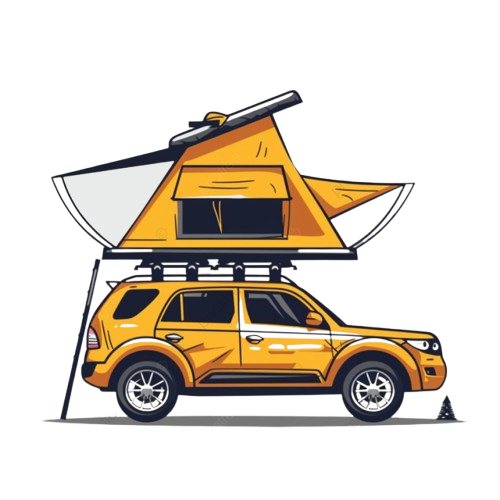
4×4 Rental in Kenya: Self-Drive Car Hire from Nairobi and Mombasa
Land Cruiser-class 4x4s delivered to your hotel or Nairobi airport, with a rooftop tent or pop-up roof, camping gear for two, and a WhatsApp group that includes our mechanic from the first day.
Message us on WhatsApp: +254 703 367441 | Get a quote
- Delivered to you. Your hotel or Nairobi airport, for a pick-up / drop-off fee. One reviewer took delivery at Lake Nakuru, and another had the vehicle collected from their house at Diani Beach.
- Backed by people you can name. On day one we create a WhatsApp group with you, the owner, a mechanic and a contact person. If something goes wrong we make reasonable efforts to repair the vehicle or, where operationally feasible, to replace it.
- Reviewed by people who drove it. TripAdvisor 5.0 from 22 reviews. Google 4.7 from 21 reviews (October 2026). Reviewers write from Germany, Norway, the US and the UK, and one review was translated from Dutch.
Jump to: Prices · Terms · If you break down · Get a quote · Routes · Do you need 4×4? · Park fees · FAQ
Published by 4×4 Self Drive Cars for Hire.
The short answer
Yes. You can rent a 4×4 in Kenya, collect it in Nairobi or Mombasa, and drive yourself on safari. We rent Land Cruiser-based 4x4s (VX, 76, 78 and 79 Series), a 4×4 Camper Cruiser and a 4×4 Safari Van, from $100 a day, each with a rooftop tent or pop-up roof and free camping gear for two. Kenya drives on the left.
The fear that stops most first-timers is not the driving. It is being stuck alone, hours from a town, in a country you do not know. That is the problem our rentals are built around, and it is what our guests write about in their reviews: the WhatsApp group, the mechanic, the handover briefing. We cannot promise a fix in a fixed time, and the breakdown section says exactly what our terms commit us to.
Not sure you need four-wheel drive? You do inside Maasai Mara, Amboseli, Tsavo and Samburu. You do not on the tarmac roads to Naivasha, Nakuru or Mombasa. The full breakdown is below.
Prices: what a self-drive 4×4 costs in Kenya
Daily rates in US dollars. All eight vehicles can be collected in Kenya, in Nairobi or Mombasa, and a pick-up / drop-off fee applies.
| Vehicle | Price per day | Seats (including the driver) | Gearbox | Good fit for |
|---|---|---|---|---|
| 4×4 Camper Cruiser with roof tent | $100 | See booking page | Automatic | Travelers who want an automatic with a roof tent at our lowest daily rate |
| 4×4 Safari Van with pop up roof | $120 | Up to 9 | Automatic, air conditioning | Families and groups; anyone who does not drive a manual |
| 4×4 Landcruiser VX with roof tent or pop up roof | $130 | Up to 5 | Manual | Couples and small families |
| 3 Seater 76 Series with roof tent or pop up roof | $140 | Up to 4 | Manual | Two to four travelers who want a classic 4×4 |
| 4×4 VX with double roof tent | $145 | See booking page | Manual | Travelers who want more sleeping space on the roof |
| 5 Seater 78 Series with pop up roof | $160 | Up to 6 | Manual | Families with luggage |
| 3 Seater 79 Series with roof tent and pop up roof | $180 | See booking page | Manual | Two travelers who want both roof options |
| 7 Seater 78 Series with pop up roof and driver | $230 | Up to 8 including the driver | Manual | Groups who want a driver-guide and no driving |
Included in every rental: comprehensive vehicle insurance with a hirer excess of up to USD 1,000 (see the terms below) · free camping gear for two (see the equipment list) · breakdown support on a reasonable-efforts basis, as set out in If you break down · help with park entry booking. Not included: fuel, park entry, pick-up and drop-off fees, cross-border fees, the optional Windscreen and Tire Damage Waiver (USD 100) and the optional Full Insurance Cover (USD 500 per rental period). Read the rental terms and conditions before you book.
Add-ons: professional driver or guide, airport transfers, extra camping equipment (cooking gear, sleeping bags, chairs, table, gas bottle and burner, fridge or cool box, awning, pillows). Long-range fuel tanks, roof racks and air conditioning are available as options.
What a real trip costs. At the published rate, 21 days in the 4×4 VX with double roof tent is 21 x $145 = $3,045 in rental charges. On top come fuel, park entry, campsite or lodge nights, the pick-up / drop-off fee, any cross-border fees and any optional insurance products. You also pay a security deposit of USD 1,000 or EUR 950 before you collect the vehicle. Cash is preferred, and card payment is possible on request (deposit rules below).
The 4×4 Camper Cruiser ($100 a day) is our lowest rate, and with the Safari Van it is one of two automatics.
Deposit, insurance and the rules that matter before you book
These points come from our 2026 rental terms. The full terms and conditions govern your booking, so read them before you pay.
| Topic | What our terms say |
|---|---|
| Who can drive | Every driver must be at least 23 years old, hold a valid driving license, have at least two years of driving experience and carry the license at all times while driving. Only drivers named in the Rental Agreement may drive. |
| Security deposit | USD 1,000 or EUR 950, paid before you collect the vehicle. Cash is preferred. Card payment (through Pesapal) is possible on request, and the card fees fall to you. The reason is practical: card fees are heavy on a $1,000 deposit, and an international bank transfer is slow and costly to reverse. The deposit is not refunded on the spot at drop-off. We start the refund after the vehicle inspection, the mechanical assessment and the check of fines. Mechanical inspections can take 6 to 14 working days, and your bank sets the rest of the timing. Any deduction has to be backed by evidence such as inspection reports, repair invoices, photographs or police reports. |
| Booking and payment | A 25% deposit confirms your reservation, or 40% where we plan your itinerary. Extra deposits can apply for gorilla and chimpanzee permits and for accommodation. The balance is due 30 days before departure, or 14 days before for late bookings. You can pay by bank transfer, credit or debit card, mobile money or an approved cash arrangement, and you cover any transfer, bank, card and currency-conversion fees. |
| Cancellations | In writing. 60 or more days before the trip: 98% refund. 30 to 59 days: 75%. 15 to 29 days: 50%. 14 days or fewer: no refund. Gorilla and chimpanzee permits follow Uganda Wildlife Authority policy instead (91 or more days: 70%; 46 to 90 days: 50%; 9 to 45 days: 25%; 0 to 8 days: no refund). There are no refunds for early returns, unused rental days or unused fuel, so buy travel and cancellation insurance. |
| Insurance included | Comprehensive cover: third-party bodily injury, death and property damage, plus accident, theft, fire, vandalism, natural disasters and animal-related incidents. You remain liable for an excess of up to USD 1,000. |
| What insurance does not cover | You are fully liable for tires, rims, windscreens, undercarriage damage, clutch damage, suspension damage, water damage, wrong or contaminated fuel, negligent or reckless driving, driving under the influence, unauthorized drivers, unauthorized night driving, unauthorized border crossings, improper use of the 4×4 system, and failing to report an accident or warning light promptly. Theft is not covered where it results from negligence, such as leaving the keys inside, leaving the vehicle unlocked or abandoning it insecurely. Personal belongings are not insured, and you need your own medical and travel insurance. Overspeeding can void cover. |
| Windscreen and Tire Damage Waiver (optional) | USD 100, non-refundable. Covers tire punctures, blowouts and cuts, windscreen chips and cracks, and rim damage directly related to a tire incident. Does not cover wheel hubs, bearings, suspension, underbody damage, side and rear windows, or mechanical damage caused by driving on. |
| Full Insurance Cover (optional) | USD 500 per rental period, non-refundable. Covers collision, rollovers, theft, fire, vandalism, animal damage and natural disasters. Does not cover tires, rims, windscreens, camping equipment, undercarriage, interior, suspension or clutch damage. It is void in cases such as overspeeding, reckless driving, driving under the influence, unauthorized night driving, unauthorized off-road driving, water damage, unauthorized drivers, unauthorized border crossings or ignoring dashboard warnings. |
| Fuel | The vehicle is supplied with about a quarter tank and must come back at the same level. Unused fuel is not refunded, and extra fuel is not compensated. Buy fuel only from Shell, TotalEnergies, Rubis or an equivalent recognized station. Damage from contaminated or wrong fuel is your liability. |
| Speed limits | 80 km/h (about 50 mph) on highways, 50 km/h (31 mph) in towns and 30 to 40 km/h (19 to 25 mph) inside national parks. Overspeeding can void insurance, bring penalties and lead to deposit deductions. The vehicles carry GPS tracking and driving-behavior monitoring, to which you consent, and repeated dangerous-driving alerts can lead to warnings or suspension of the rental. |
| Where you cannot drive | Nowhere between sunset and sunrise without our prior written approval. Not through water deeper than 30 cm (about 12 inches). Not on sand dunes, salt pans or restricted off-road terrain unless we authorize it. No smoking in the vehicle or the tents. |
| Border crossings | Prior written approval, a valid COMESA Yellow Card and payment of cross-border fees. See Crossing into Tanzania, Uganda or Rwanda. |
| Fines, tolls and camping gear | Traffic fines, parking penalties, tolls and administrative penalties are yours. Loss, theft or damage of camping equipment is charged at full replacement value and is excluded from both insurance products. |
| Accidents | Tell us immediately, report to the police within 24 hours and get a police report or reference number, photograph the scene, all vehicles and the damage, collect witness and third-party details, do not admit liability, and secure the vehicle. |
| Governing law | The terms are governed by the laws of Uganda, and unresolved disputes go to the competent courts of Uganda. |
If you break down: what actually happens
Read our TripAdvisor reviews and the same things come up again and again. Not horsepower. These:
- Before you land: the vehicle can be delivered to your hotel or the airport, for a pick-up / drop-off fee. Reviewers describe delivery to a hotel in Nairobi (Joerg J, Jul 2026) and to Lake Nakuru (Halvard Midtun, May 2026), a return at Nairobi airport before a flight (Halvard Midtun), and collection from a house in Diani Beach (Joerg J). You do not have to find a rental desk after an overnight flight.
- At handover: a thorough briefing, an inventory checklist of everything in the vehicle, and a hands-on demonstration of how to set up the rooftop tent, which you can ask for. Reviewers mention all three.
- From day one: a WhatsApp group with you, the owner, a mechanic and a contact person. One thread, so you explain a problem once and everyone who can help already sees it. Reviewers name Jeremiah, Denis, Hakim and Denrick.
- If the vehicle fails: tell us straight away. Under our terms we make reasonable efforts to arrange a repair or, where operationally feasible, to provide a replacement vehicle. Reviewers describe what that has looked like: a mechanic from our network reaching a guest in Nanyuki after a four-wheel-drive problem (Jose V, May 2026), and the team tracking a guest down en route to fix minor things (sarahfL6911TT, Aug 2026).
What to do in the first five minutes
- Stop somewhere visible, switch on your hazard lights, and stay with the vehicle. In a national park, stay inside it.
- Open the WhatsApp group and send your live location pin, one photo of the dashboard or the problem, and one line on what happened.
- Answer the team’s questions in the group, where everyone who can help can see them.
- No signal? Park rangers and passing safari vehicles are your fallback. Save the team’s phone numbers on paper as well as in your phone, so a ranger or another driver can call for you.
- Do not arrange repairs yourself. Our terms say no repairs or dismantling without our authorization. In a genuine emergency a nearby mechanic may help, but you must contact us before any repair begins.
What we cannot promise. Our terms commit us to reasonable efforts, not to a guaranteed fix or a guaranteed replacement vehicle. Response times depend on location, accessibility, border restrictions and vehicle availability, and cell signal is patchy in parts of the Mara, Tsavo and Samburu, so we do not publish a response time. If a confirmed mechanical failure that you did not cause leaves the vehicle unusable for 10 hours or more within a rental day, that day’s rental may be refunded. We are not liable for accommodation, missed activities, transport delays or third-party bookings, so build slack into your plan: leave a buffer day before any international flight, do not book a flight home on the same day as your last long drive, and buy travel insurance.
Two things worth doing at handover. Ask to be shown the spare wheel, the jack and the lug wrench, and loosen one lug nut yourself while the handover person is beside you. Send a test message in the WhatsApp group before you drive away, so you know the group works on your phone.
Check availability and get a quote
Tell us your dates, your arrival airport and how many people are traveling. We reply on WhatsApp or email.
Message us on WhatsApp · info@4x4selfdrivecarsforhire.com · +254 703 367441
Collecting your vehicle: Nairobi or Mombasa
We hand over vehicles in Nairobi and Mombasa, and every vehicle in the fleet can be collected at either. A pick-up / drop-off fee applies, and it depends on the location. Where you collect depends on where your trip starts and ends.
| Nairobi | Mombasa and Diani | |
|---|---|---|
| Choose it if | You fly into Jomo Kenyatta International (JKIA) and head for the Mara, Lake Nakuru, Amboseli, Samburu or Mount Kenya | You fly into Mombasa, start on the coast, or want to finish your trip at the beach |
| Where we hand over | Your hotel or the airport | Hotels and airports. One reviewer (Joerg J, Jul 2026) had their vehicle collected from their house at Diani Beach. |
| Your first drive | City traffic, then the highway (next section) | Heat, and a choice of route to Diani: the Likoni ferry or the Dongo Kundu bypass |
| One-way trips | Collect in Nairobi and return at Diani Beach. One reviewer did this: delivery at a Nairobi hotel, collection at Diani Beach (Joerg J, Jul 2026). Ask us for the fee on this route. | The same trip in reverse, if your flights start on the coast |
If you land at night. Many intercontinental flights reach Nairobi late in the evening or before dawn. Tell us your arrival time when you book. A hotel delivery the next morning is usually a better first drive than an airport pick-up in the dark, because you start in daylight and rested. Our terms also prohibit driving between sunset and sunrise without our prior written approval.
Beyond the spare wheel and the WhatsApp test, ask your handover person about:
- the fuel type, the starting fuel level (about a quarter tank) and how far a full tank takes you;
- how to engage four-wheel drive and low range, and when not to;
- the rooftop tent: set it up once yourself, in daylight, before you need it;
- the fridge or cool box: one reviewer (Anne N, Jun 2026) reported that it cooled poorly and switched off with the engine, so ask how it is powered and plan your food around that;
- the air conditioning, and what the dashboard warning lights mean;
- photographing every side of the vehicle, including the interior, before you leave. Reviewers describe older Land Cruisers with some worn interior trim.
Getting out of Nairobi
Nairobi is the hardest driving on most itineraries, and you do it in your first hour in an unfamiliar vehicle. Weekday traffic peaks roughly 6:30 to 9:30 am and 4:30 to 8 pm. Leave before 7 am or after 10 am if you can.
Your road depends on your destination:
- West: Mara, Naivasha, Nakuru. The A104 through Kikuyu. If you start at the airport, the Southern Bypass runs from Mombasa Road around the south-west of the city and joins the A104 at Gitaru, which keeps you out of the center.
- South: Amboseli. Via Namanga, take Mombasa Road to Athi River, then the A104 through Kitengela and Kajiado. Via Emali, stay on Mombasa Road (the A109) and turn off at Emali.
- South-east: Tsavo and Mombasa. Mombasa Road (A109). The stretch through Mlolongo and Athi River is slow, with trucks, minibuses and roadworks. The tolled Nairobi Expressway runs above part of it toward Westlands and can save time at rush hour. Ask at handover how to pay the tolls.
- North: Mount Kenya, Chuka, Samburu. Thika Road (the A2).
What catches visitors out: matatus (minibus taxis) stop without warning; boda-bodas (motorbike taxis) filter up both sides; pedestrians cross anywhere; speed bumps are often unmarked; and potholes open fast after rain. Google Maps and Waze both work in the city. Download the offline map for Kenya before you fly.
Park in hotel lots or attended lots, and keep bags out of sight, including at gas stops. If you land with half a day to spare, Nairobi National Park (run by KWS, on the city’s edge) is a low-stakes first outing: you learn the vehicle, the tent and the gearbox before the first long drive.
Driving in Kenya: the basics for first-timers
- Left-hand traffic. Keep left and overtake on the right. At roundabouts, go clockwise and give way to traffic already on the roundabout, coming from your right. The classic mistake happens on empty roads after a turn, not in traffic, so say “left” out loud after every turn. Expect the steering wheel on the right.
- Gearbox. The VX, 76, 78 and 79 Series vehicles are manual: gear stick in your left hand, clutch under your left foot. The Safari Van and the Camper Cruiser are automatic. If you rarely drive a manual, choose one of those two. Do not learn on the A104.
- License and driver rules. Every driver must be at least 23, hold a valid driving license and carry it at all times while driving, have at least two years of driving experience, and be named in the Rental Agreement. Nobody else may drive. Ask us before you fly if you are unsure whether your license is enough or whether you need an International Driving Permit.
- Speed. The limits in our terms are 80 km/h (about 50 mph) on highways, 50 km/h (31 mph) in towns and 30 to 40 km/h (19 to 25 mph) inside national parks. Overspeeding can void your insurance, bring penalties and lead to deductions from your deposit, and the vehicles carry GPS tracking and driving-behavior monitoring. Expect speed checks on the highways, and obey any lower posted limit.
- The vehicle itself. These are working trucks, and one Google reviewer (Eoghan P, about May 2026) reported that their vehicle got a bit wobbly above 70 km/h (43 mph) and had a pull to the right. If your vehicle does anything like that, slow down and tell the group. Do not wait until the next day. Check the oil, coolant, tire pressure and warning lights regularly, and report any warning light promptly, because failing to report one can make you liable for the damage that follows.
- Police checkpoints. Expect them on the main highways and at the edge of larger towns. They are routine. An officer in uniform signals you to stop; you slow down, stop, greet them, wind the window down and say where you are going. Most stops last a minute. Keep your license, passport and rental paperwork within reach so you are not searching the glovebox. If an officer asks for cash at the window, stay polite, ask for a written notice, say you need to speak to your rental company, and message the WhatsApp group. Do not argue, keep your doors locked, and do not hand over the keys.
- Fuel. Your vehicle is supplied with about a quarter tank and must come back at the same level, and unused fuel is not refunded. Buy fuel only from Shell, TotalEnergies, Rubis or an equivalent recognized station, because damage from contaminated or wrong fuel is your liability. Stations are frequent on highways and in towns and rarer in rural areas, and small stations can run short of diesel. Fill up at the last big town before each park: Narok for the Mara; Emali, Kimana or Namanga for Amboseli; Mtito Andei or Voi for Tsavo; Nanyuki or Isiolo for Samburu. Do not count on fuel inside parks. Top up whenever the tank is half full and the next big town is more than 100 km (62 miles) away. Gasoline (petrol) and diesel come from adjacent pumps, so check what your vehicle takes.
- Daylight. Sunset is close to 6:30 pm all year, and dusk is short. Our terms prohibit driving between sunset and sunrise unless we have approved it in writing beforehand, and unauthorized night driving is excluded from insurance cover. Plan to be parked before sunset. Parks close their gates in the evening, so check the closing time with the managing authority, and the main road dangers (unlit trucks, pedestrians, livestock, potholes) are worst after dark.
- Water, terrain and smoking. Our terms prohibit driving through water deeper than 30 cm (about 12 inches), and driving on sand dunes, salt pans or restricted off-road terrain unless we have authorized it. Water damage is excluded from insurance. Smoking is not allowed in the vehicle or the tents.
- Phone, maps and money. Buy a local SIM or an eSIM before you fly; Safaricom has the widest coverage. The WhatsApp group only helps where you have signal. Carry Kenyan shillings in small notes for fuel stops and small purchases, because card machines fail away from the towns. ATMs are in towns such as Narok, not at the park gates.
- Entry rules. Check Kenya’s entry requirements for your nationality (a visa or an electronic travel authorization) on the official Kenyan government immigration portal before you fly, and use only that official site.
- Travel advice. Read your own government’s advisory for Kenya (for example the US State Department or the German Auswärtiges Amt) before you book and again before you fly. Note which areas it flags and ask us if a route you plan touches one.
Where you can drive: route by route
Distances are approximate road distances from Nairobi. Drive times assume no major delay. Sources disagree on several of these figures, so use them for planning, not for timing a flight.
Maasai Mara
Fast facts: Nairobi to Sekenani Gate about 235 km (146 miles), 5 to 6 hours · tarmac to Narok and, per recent guides, on to the gate · graded murram and dirt inside · last big fuel stop and ATM: Narok · 4×4 needed inside.
The road is really two roads. Nairobi to Narok (about 145 km, 90 miles) is tarmac. You leave on the A104, drop down the Rift Valley escarpment at Mai Mahiu, cross the plain past Suswa and climb to Narok. Allow 2.5 to 4 hours depending on traffic. Trucks use the escarpment road, and the Rironi to Mai Mahiu section is under reconstruction as part of the Nairobi to Nakuru to Mau Summit highway upgrade, so expect works and slow patches through your trip. After heavy rain, silt from Mount Longonot has flooded the road near Kedong Ranch, close to Suswa, and closed it briefly before.
Narok to Sekenani Gate is about 85 to 90 km (53 to 56 miles) and used to be the notorious part. Recent guides describe it as sealed all the way to the gate. Older reports, and a few current ones, still describe broken or gravel sections near the reserve boundary, so treat the gate as the point where reliable tarmac ends and ask in the WhatsApp group on the morning you leave.
Past the gate, everything is murram and dirt tracks. The Mara’s black cotton soil turns to sticky mud in rain and can hold a two-wheel-drive vehicle for hours. March to May and November to December are the months when even a Land Cruiser loses serious time.
Practical points. Narok is the last large fuel stop; stations near the gates are scarcer and pricier, and card machines there fail. Leave Nairobi by about 7 am so you arrive in early afternoon and are settled before dark. The Mara is run by Narok County (the Mara Triangle by the Mara Conservancy), not by KWS, so tickets and payment work differently (see Park fees). Conservancies around the reserve often restrict self-drive vehicles, so check with your camp or conservancy before assuming you can drive in.
Amboseli
Fast facts: Nairobi to the park about 230 to 240 km (143 to 149 miles), 5 to 6 hours · tarmac for most of the way, rough final 45 to 65 km (28 to 40 miles) · no fuel inside · KWS park · 4×4 strongly recommended, and essential after rain.
There are two approaches. Via Namanga, the A104 is tarmac to the Tanzanian border town (about 165 km, 103 miles), then a dusty, potholed road to Meshanani Gate. Via Emali, you leave the A109, drive toward Loitokitok, pass Kimana and enter at Kimana Gate. Sources disagree about which last stretch is worse, so ask in the WhatsApp group before you pick one. Fill up at Emali, Kimana or Namanga; there are no stations inside the park.
Amboseli’s fine volcanic dust gets into everything, so keep camera gear sealed and close the vents on dusty tracks. Kilimanjaro, across the border in Tanzania, is often clearest at dawn and dusk and often under cloud by mid-morning. Tracks near the swamps flood after rain, so follow the rangers’ advice and never push through standing water.
Tsavo West and Tsavo East
Fast facts: Mtito Andei Gate (Tsavo West) about 240 km (149 miles) from Nairobi · Voi (Tsavo East) about 330 to 340 km (205 to 210 miles) · tarmac to the gates, red murram and sand inside · fuel at Mtito Andei and Voi, none inside · KWS parks · 4×4 recommended.
The Nairobi to Mombasa highway and railway split Tsavo into two parks. Tsavo West has several gates (Mtito Andei, Tsavo, Chyulu, Maktau, Ziwani and Jipe); Tsavo East is entered through Manyani, Voi, Buchuma or Sala. Choose your gate before you leave, because the wrong entrance can add hours. Mtito Andei to Voi is 96 km (60 miles) on the A109, so moving from West to East is a short highway hop.
Tsavo is hot and red. Red dust coats everything, so bag your roof tent and keep food sealed. One reviewer says the 78 Series air conditioning does not work well and that the vehicle gets dusty. If heat bothers you, ask about the Safari Van, which is listed with air conditioning, or drive early and late. Never cross a dry riverbed (lugga) that has water running in it. A river can fill from rain far upstream under a clear sky.
The A109: Nairobi to Mombasa
Fast facts: about 480 km (300 miles), plan 7 to 9 hours · tarmac, mostly two lanes · heavy truck traffic · fuel in Athi River, Emali, Mtito Andei, Voi and Mariakani · 4×4 not needed.
The A109 carries the cargo from Mombasa port, so trucks set the pace. Many stretches have blind rises where passing is a gamble. Expect speed checks, checkpoints, livestock near towns and long backups behind broken-down trucks. Do not drive it at night: our terms prohibit night driving without prior written approval. Few travelers drive it in one go. One reviewer (Joerg J, Jul 2026) drove Nairobi, Amboseli, Tsavo West, Tsavo East, Diani Beach and Shimba Hills.
Mombasa and Diani
Fast facts: about 45 minutes from the Mombasa airport side to Diani via the Dongo Kundu bypass · tarmac · hot and humid · 4×4 not needed · one guest had their vehicle collected from their house at Diani Beach.
Diani is south of Mombasa island. You reach it by the Likoni ferry, which can be slow when the line is long, or by the Dongo Kundu bypass, a bypass that opened to traffic in August 2024 and links the Miritini area near the airport to the south coast. Avoid Mombasa island at rush hour. Diani’s roads are tarmac, so you need a 4×4 only if you want one. Shimba Hills National Reserve (KWS) is inland from Diani and makes a day trip.
Lake Nakuru and Naivasha
Fast facts: Naivasha about 90 km (56 miles) and Nakuru about 160 km (100 miles) from Nairobi · tarmac · busy · KWS parks · 4×4 optional in the dry season.
The A104 beyond Kikuyu is the same road as the Mara route as far as Mai Mahiu. The Nairobi to Nakuru stretch is among the most accident-prone roads in Kenya, according to the national road-safety authority (NTSA), so keep your speed down and your distance up, especially around trucks and when overtaking. Lake Nakuru National Park (KWS) has its main gate beside Nakuru town, and we delivered a vehicle to a guest at Lake Nakuru (Halvard Midtun, May 2026). Near Naivasha, Hell’s Gate National Park lets you walk and cycle among wildlife.
Samburu
Fast facts: about 350 km (220 miles), roughly 6 hours via Thika, Nyeri, Nanyuki, Isiolo and Archers Post · paved most of the way, sand and rock tracks inside · fuel at Nanyuki and Isiolo · county-run reserves · 4×4 needed inside.
Samburu is hotter and drier than the south. It is where you see species you will not see in the Mara, including Grevy’s zebra, reticulated giraffe, Somali ostrich, gerenuk and beisa oryx. The road crosses the equator at Nanyuki, which is worth a photo. One reviewer who had a four-wheel-drive problem in Nanyuki (Jose V, May 2026) says a mechanic from our network came out to fix it. Samburu and Buffalo Springs are county-managed reserves, not KWS parks, so ticketing differs.
Mount Kenya and Chuka
Fast facts: Chuka about 180 km (110 miles) from Nairobi via Thika and Embu · tarmac · cool and green · KWS gates for Mount Kenya National Park.
One reviewer (Halvard Midtun, May 2026) toured the Naivasha, Chuka and Mount Kenya region. Chuka is tea and coffee country on the mountain’s eastern slopes, away from the main safari circuit. The main roads are tarmac. Nights are cold at altitude, so ask about warmer sleeping bags. The forest tracks above the park gates are where four-wheel drive matters.
Do you actually need a 4×4 in Kenya?
| Where | What the road is like | 4×4? |
|---|---|---|
| Nairobi, Naivasha, Nakuru, Nanyuki, Embu, Chuka (main roads) | Tarmac | No |
| A109 Nairobi to Mombasa, and Diani | Tarmac | No |
| Maasai Mara tracks | Murram and black cotton soil | Yes, in practice |
| Amboseli approach and tracks | Rough dirt, dust, seasonal flooding | Strongly recommended, essential after rain |
| Tsavo West and East tracks | Red murram, corrugations, sand, dry riverbeds | Recommended, essential in the wet |
| Samburu tracks | Sand, rock, riverbeds | Yes |
| Lake Nakuru National Park | Maintained tracks | Optional in the dry, helpful in the wet |
| Mount Kenya forest tracks | Mud and ruts | Yes |
If your plan is Nairobi to Naivasha to Nakuru, or Nairobi to Mombasa to Diani, all on tarmac, four-wheel drive is more vehicle than you need. In that case the reasons to rent from us are the delivery, the roof-tent setup and the support, not the drivetrain. What a 4×4 buys you on a murram track is ground clearance and low-range gearing for mud, not immunity. Stay on marked tracks, walk a doubtful crossing before you drive it, and ask the group if you are unsure.
Park fees and entry: who you pay, and how
Park fees are not part of your rental price, and we do not quote them here because they change and are set by the managing authority, not by us. Kenya has two kinds of managing authority, and old blog posts mix them up.
- Kenya Wildlife Service (KWS) parks. Amboseli, Tsavo East and West, Lake Nakuru, Nairobi National Park, Hell’s Gate, Shimba Hills and Mount Kenya. See the official KWS website for the current tariff, how to pay and how far ahead to pay.
- County-run reserves. Maasai Mara (Narok County, with the Mara Triangle run by the Mara Conservancy) and Samburu and Buffalo Springs. These have their own ticketing, their own prices and their own rules, so check each one’s official channel for your dates.
Budget for park fees as a separate line in your trip cost. They change from year to year, they can differ by season, by residency and by whether you stay inside or outside a reserve, and camping may be charged separately. We help with park entry booking, so ask us for the current process for your dates. Follow the managing authority’s rules inside each park, including camping only at designated campsites and leaving before closing time.
Sample trips, from a week to a month
| Trip | Rough length | Notes |
|---|---|---|
| Coast-bound circuit: Nairobi, Amboseli, Tsavo West, Tsavo East, Diani | 8 to 12 days | The route one reviewer (Joerg J, Jul 2026) drove, which also took in Shimba Hills. That guest took delivery at a Nairobi hotel and had the vehicle collected at Diani Beach. |
| Mara and the Rift Valley: Nairobi, Naivasha, Nakuru, Maasai Mara, Nairobi | 7 to 10 days | Tarmac to the Mara gate, then dirt tracks inside the reserve. |
| Mount Kenya and Samburu: Nairobi, Chuka, Nanyuki, Samburu, Nairobi | 7 to 9 days | Hot and dry in the north, cool on the mountain. One reviewer (Halvard Midtun, May 2026) toured the Naivasha, Chuka and Mount Kenya region. |
| Kenya and northern Tanzania | 3 to 4 weeks | One reviewer (Peter L, Jun 2026) rented for 26 days for Kenya and northern Tanzania. |
Lengths are planning guides, not packages, and where a reviewer drove part of a route the notes say who. Legs on the coast-bound circuit: Nairobi to Amboseli about 230 to 240 km (143 to 149 miles) · Amboseli to Tsavo West · Mtito Andei to Voi 96 km (60 miles) · Voi to Diani roughly 190 to 200 km (about 120 miles), 3.5 to 4.5 hours.
For three or four weeks, join two loops and put a rest day between them. Do not plan more than about five hours of driving on any day with a game drive in it. Wondering whether to sleep on the roof or in lodges? Read why a rooftop tent beats a lodge . For a longer route, see the 14-day East Africa self-drive safari .
When to go
- Dry seasons: late June to October, and January to February. Roads are best. The wildebeest herds are usually in the Mara from about July to October, so that is also the busiest time.
- Long rains: March to May, wettest in April. Mara and Amboseli tracks are at their worst and the Suswa road can flood.
- Short rains: about November to December. Showers are shorter, but murram tracks turn slick after any heavy storm.
As a self-driver you feel the season more than a guest in a guided vehicle, because you are the one in the mud. If you must travel in March to May, shorten your Mara days and have a plan B.
Crossing into Tanzania, Uganda or Rwanda
Cross-border travel is possible, but it is never automatic. Our terms require our prior written approval, a valid COMESA Yellow Card and payment of cross-border fees, so raise it in your first message, before your booking is confirmed. A crossing without approval ends the rental, voids your insurance and forfeits your security deposit. Reviewers describe a one-way trip from Entebbe through Rwanda to Arusha, crossing two borders in 21 days (sarahfL6911TT, Aug 2026), and a 26-day rental for Kenya and northern Tanzania (Peter L, Jun 2026). Because every vehicle can be collected at Nairobi, Mombasa, Arusha, Kampala and Kigali for a pick-up / drop-off fee, one-way trips between those cities are worth asking about.
From Kenya, the usual road crossing to Tanzania is Namanga (about 165 km from Nairobi, then around 110 km to Arusha, where we have a hub), and the usual crossings to Uganda are Busia and Malaba. Plan to cross in the morning and leave time to spare; trucks line up at the busier crossings.
Read next: 4×4 self-drive car hire in Tanzania · 4×4 self-drive car hire in Uganda · 4×4 self-drive car hire in Rwanda.
What guests say, including the complaints
TripAdvisor shows 5.0 from 22 reviews and Google shows 4.7 from 21 (October 2026). Reviewers come from Germany, Norway, the US and the UK, and one review was translated from Dutch. They praise the WhatsApp group, the mechanic, the briefing and the delivery. Read the full reviews.
The complaints are specific, and we keep them visible:
- Older Land Cruisers. One reviewer (sarahfL6911TT, Aug 2026) called a 78 Series very old and dusty, with air conditioning that does not work well.
- Some interior trim is worn, and parts of one interior were starting to come apart (Anne N, Jun 2026).
- The fridge cooled poorly and switched off when the engine was off (Anne N).
- The security deposit had to be paid in cash (Anne N). Cash is how we prefer to take the USD 1,000 or EUR 950 deposit, and the reason is practical: card fees are heavy on a $1,000 deposit, and an international bank transfer is slow and costly to reverse. Card payment is possible on request, with the fees at your cost. The refund starts after the vehicle inspection and mechanical assessment, 6 to 14 working days, and then depends on your bank.
- One vehicle got a bit wobbly above 70 km/h (43 mph) and had a pull to the right (Eoghan P, Google, about May 2026).
These are working expedition trucks, not showroom SUVs. If you want leather seats and strong air conditioning, this may be the wrong rental. If you want a mechanically simple truck, a rooftop tent and a team that answers on WhatsApp, it is the right one. Tell us about anything you notice at handover so it is fixed or noted before you drive away.
Frequently asked questions
Can I rent a 4×4 in Kenya and drive myself on safari?
Yes. 4×4 Self Drive Cars for Hire rents self-drive 4x4s in Kenya, delivered to your hotel or Nairobi airport for a pick-up / drop-off fee. Every vehicle comes with a rooftop tent or pop-up roof and free camping gear for two. Before you drive off you get a briefing and an inventory checklist, and you can ask for a hands-on demonstration of the tent. On day one we create a WhatsApp group with you, the owner, a mechanic and a contact person. Kenya drives on the left, and every vehicle except the Safari Van and the Camper Cruiser has a manual gearbox.
How much does a 4×4 rental in Kenya cost per day?
Published daily rates are $100 for the 4×4 Camper Cruiser with roof tent, $120 for the 4×4 Safari Van, $130 for the Landcruiser VX, $140 for the 3 Seater 76 Series, $145 for the 4×4 VX with double roof tent, $160 for the 5 Seater 78 Series, $180 for the 3 Seater 79 Series, and $230 for the 7 Seater 78 Series with a driver included. Comprehensive insurance with a hirer excess of up to USD 1,000 and camping gear for two are included. Fuel, park entry, pick-up and drop-off fees, cross-border fees and optional insurance products are extra, and a refundable security deposit of USD 1,000 or EUR 950 is due before collection.
Do I need a 4×4 in Kenya, or will a normal car do?
On tarmac, such as Nairobi to Naivasha, Nakuru, or Mombasa and Diani, a normal car does. Inside Maasai Mara, Amboseli, Tsavo and Samburu you want a 4×4: the tracks are murram, sand and, in the Mara, black cotton soil that traps two-wheel-drive vehicles in rain. After rain, four-wheel drive moves from recommended to essential. A 4×4 gives you clearance and traction, not immunity, so stay on marked tracks.
What happens if my rental breaks down in a national park?
Stay in the vehicle and send your live location, a photo and one line about the problem to the WhatsApp group, which already includes the owner, a mechanic and a contact person. Do not arrange repairs yourself, because our terms require our authorization first. We make reasonable efforts to arrange a repair or, where operationally feasible, to provide a replacement vehicle, but response times depend on location, accessibility, border restrictions and vehicle availability, and we do not guarantee a response time. If a confirmed mechanical failure that you did not cause leaves the vehicle unusable for 10 hours or more within a rental day, that day’s rental may be refunded. With no signal, ask park rangers or a passing safari vehicle to relay a message.
Can I collect a 4×4 at Nairobi airport and return it in Diani or Mombasa?
Yes. We offer pick-up and drop-off at airports and hotels, and every vehicle can be made available at Nairobi, Mombasa, Arusha, Kampala and Kigali, with a pick-up / drop-off fee that depends on the location. One reviewer took delivery at a hotel in Nairobi and had the vehicle collected from their house in Diani Beach, and another returned a vehicle at Nairobi airport before a flight, so a one-way trip from Nairobi to the coast is possible. Tell us your route when you book and we will confirm the arrangement and the fees for your dates. If you land at night, ask for a hotel delivery the next morning.
Which side of the road do they drive on, and what license do I need?
Kenya drives on the left, and the steering wheel is on the right. Every driver must be at least 23, hold a valid driving license and carry it at all times while driving, have at least two years of driving experience, and be named in the Rental Agreement. Ask us before you fly if you are unsure whether your license is enough or whether you need an International Driving Permit. Check Kenya’s entry requirements for your nationality on the official Kenyan government immigration portal.
Is it safe to self-drive in Kenya?
The risks to plan around are road risks, not wildlife: trucks, minibuses, motorbikes, pedestrians, livestock and potholes. Night driving is prohibited under our terms without prior written approval, and overtaking on two-lane highways is the other habit to avoid. Drive in daylight, keep to our speed limits (80 km/h on highways, 50 km/h in towns, 30 to 40 km/h in parks), and stay in the vehicle inside parks. Read your own government’s travel advisory before you book. The WhatsApp group with our team is there for the problems you cannot avoid.
Can I take the rental to Tanzania, Uganda or Rwanda?
Yes, with approval. Cross-border travel needs our prior written approval, a valid COMESA Yellow Card and payment of cross-border fees, so tell us before your booking is confirmed. A crossing without approval ends the rental, voids your insurance and forfeits your security deposit. From Kenya, the usual crossing to Tanzania is Namanga, with Arusha about 110 km (68 miles) beyond, and the usual crossings to Uganda are Busia and Malaba.
How much is the security deposit, and what does the insurance cover?
The security deposit is USD 1,000 or EUR 950, paid before you collect the vehicle. Cash is preferred, because card fees are heavy on a $1,000 deposit and an international bank transfer is slow and costly to reverse. Card payment is possible on request, with the card fees at your cost. The deposit is not refunded on the spot at drop-off: the refund starts after our vehicle inspection and mechanical assessment, which can take 6 to 14 working days, and then depends on your bank. Every rental includes comprehensive insurance with a hirer excess of up to USD 1,000. Tires, rims, windscreens, undercarriage, clutch, suspension and water damage are not covered, and neither are wrong fuel, unauthorized drivers, unauthorized night driving or unauthorized border crossings. A Windscreen and Tire Damage Waiver costs USD 100 and optional Full Insurance Cover costs USD 500 per rental period. Both are non-refundable and have their own exclusions.
What is your cancellation policy?
Cancellations must be made in writing. We refund 98% if you cancel 60 or more days before the trip, 75% at 30 to 59 days, 50% at 15 to 29 days, and nothing at 14 days or fewer. A 25% deposit confirms a booking, or 40% where we plan your itinerary, and the balance is due 30 days before departure, or 14 days for late bookings. Gorilla and chimpanzee permits follow Uganda Wildlife Authority policy instead. Travel and cancellation insurance is strongly advised.
Ready to plan your Kenya drive?
Send us your dates, your arrival airport and where you want to go. We will tell you which vehicle fits your route.
Message us on WhatsApp: +254 703 367441 | Get a quote | info@4x4selfdrivecarsforhire.com