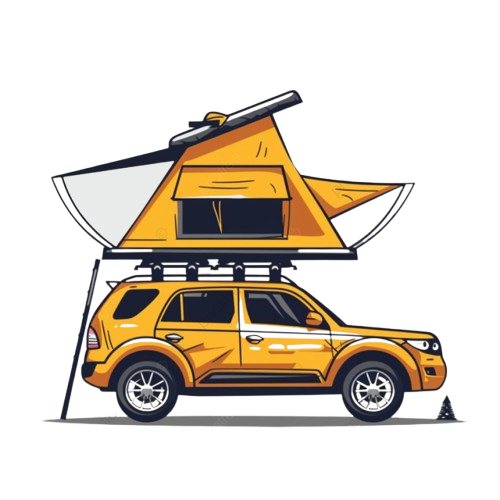
Can you actually drive yourself in Rwanda? Yes, and it is the easiest country in East Africa to do it in. Rwanda has the best tarmac in the region, and from Kigali both Volcanoes National Park and Akagera National Park are a day’s drive on paved roads. The 4×4 matters for what comes after the highway: the rough approach around Kinigi, the dirt tracks inside Akagera, and the rest of your route if you continue into Uganda, Tanzania or Kenya. The one thing that really catches drivers out is not the surface. It is that Rwanda drives on the right, while Kenya, Uganda and Tanzania drive on the left.
This guide is written from the driver’s seat for travellers from the United States and Western Europe who feel nervous about driving themselves in Africa. Distances are in kilometers and miles, and prices are in USD.
The two parks are very different trips
People expect Rwanda to be all forest and gorillas. It is not.
- Volcanoes National Park (north-west, near Musanze) is montane forest on the slopes of the Virunga volcanoes. This is the gorilla park: cool, wet, green and high.
- Akagera National Park (east, along the Tanzanian border) is savannah, lakes and papyrus swamp. It is the Big Five park of Rwanda, which surprises visitors who assumed the whole country was forest.
They lie in opposite directions from Kigali, so plan them as two separate out-and-back drives rather than a loop.
Starting in Kigali
Kigali is one of our five pick-up and drop-off hubs. Cross-border hire is allowed across Kenya, Tanzania, Uganda and Rwanda, and vehicles can be delivered to airports and hotels. Pick-up and drop-off fees apply by location.
Collect the vehicle, take the full briefing, and spend an hour getting used to the car in Kigali before you head out. Kigali is orderly, but motorbike taxis and pedestrians are everywhere and the city is hilly.
Kigali to Volcanoes National Park (Kinigi, near Musanze)
- Distance: roughly 100 km (about 62 miles).
- Time at the wheel: plan on roughly 2.5 to 3 hours with stops. Mapping apps will often show less. Hills, trucks and the climb out of Kigali slow everyone down.
- Surface: tarmac almost all the way, in good condition. This is where Rwanda’s road reputation is earned.
- Where the tarmac ends: the final approach around Kinigi can include rougher volcanic-rock road. It is slow rather than technical.
Is a 4×4 needed? For the highway, no: a 2WD would cope. For the Kinigi approach, especially in the wet season, higher clearance and good tyres are sensible insurance. Low range is not needed. If your trip continues into Uganda, the same 4×4 serves the whole route.
Mapping apps underestimate murram (graded earth) and volcanic-rock roads. Add a margin to every estimate and aim to be parked well before sunset. Our contract prohibits night driving between sunset and sunrise without prior written approval.
Gate and authority: Volcanoes National Park is managed by the Rwanda Development Board (RDB): https://www.rdb.rw and https://www.visitrwanda.com. Permits, rules and fees are set by RDB and change, so we quote none here. Check RDB directly. We can assist with gorilla permit and park entry booking.
Where to sleep: most travellers use lodges and guesthouses around Musanze and Kinigi, because the area is cold and wet and most people want a proper bed before an early start. A rooftop tent is possible in principle at private sites outside the park.
Fuel: fill up in Kigali or Musanze before the park. Use recognised stations (our contract names Shell, TotalEnergies, Rubis or equivalent).
Kigali to Akagera National Park
- Distance: roughly 110 to 125 km (about 68 to 78 miles) to a park gate, depending on the entrance.
- Time at the wheel: about 2 to 2.5 hours to the gate on tarmac, then slow driving inside.
- Surface: paved to or near the gate. Inside Akagera the tracks are dirt, dusty and in places corrugated. The contract speed limit inside national parks is 30 to 40 km/h (about 19 to 25 mph), which suits game viewing anyway.
Is a 4×4 needed? More often than at Volcanoes, yes. In the dry season much of the main circuit is manageable, but dirt tracks can turn sticky after rain, and a high-clearance 4×4 is the right tool. Low range is rarely essential. Driving through water deeper than 30 cm is prohibited under our terms, so if a track floods, turn back.
Gate and authority: Akagera is run in partnership between RDB and African Parks. Start at https://www.rdb.rw and https://www.visitrwanda.com. Entry fees and rules are theirs, and we quote none.
Fuel: fill up in a town on the way, such as Kayonza, before entering. Do not count on fuel inside the park.
Where to sleep: Akagera is the Rwandan park that suits self-sufficient camping, and a rooftop tent is a natural fit on the savannah. Every vehicle comes with free camping gear for two.
Be honest about heat and dust. Guests tell us older Land Cruisers get dusty and that the 78 Series air conditioning is weak.
Which vehicle for Rwanda
Rwanda’s roads are kind, so you are paying for park tracks and for the rest of your route. Prices are per day, as published:
| Vehicle | Price/day | Fit for this trip |
|---|---|---|
| 4×4 Camper Cruiser with roof tent | $100 | Automatic with a roof tent, the cheapest way to camp in Akagera. Listed on the site as Uganda and Rwanda only. |
| 4×4 Safari Van with pop up roof | $120 | Up to 9 incl. driver, automatic, AC. Good for groups on the tarmac and for game viewing through the pop-up roof. |
| 4×4 Landcruiser VX with roof tent or pop up roof | $130 | Up to 5 incl. driver. |
| 3 Seater 76 Series with roof tent or pop up roof | $140 | Up to 4 incl. driver. |
| 4×4 VX with double roof tent | $145 | Labelled recommended on our site. |
| 5 Seater 78 Series with pop up roof | $160 | Labelled best 4×4. Up to 6 incl. driver. Manual. |
| 3 Seater 79 Series with roof tent and pop up roof | $180 | Labelled best seller. Manual. |
| 7 Seater 78 Series with pop up roof AND DRIVER | $230 | Up to 8 incl. driver; a driver/guide is included, so you do not handle the side-of-road switch yourself. |
All include free camping gear for two. The 78, 76, 79 and VX are manual; the Camper Cruiser and Safari Van are automatic. If you are unsure about a manual while also driving on the unfamiliar side, choose an automatic.
The one that really matters: Rwanda drives on the RIGHT
Kenya, Uganda and Tanzania drive on the left. Rwanda drives on the right. If your trip crosses a border, you swap sides at the frontier, with no transition.
What that means in practice:
- Junctions and fuel stations go wrong first. The classic mistake is pulling out of a quiet junction or station into the wrong lane. Say “keep right” or “keep left” aloud for the first day after each crossing.
- Roundabouts flip direction. Look before you enter.
- Overtaking is where it bites. Your view past a truck depends on where you sit relative to the centerline, so after a crossing your sight line changes. Overtake less, and let the passenger call it.
- Cross early. Do the border in the morning, rest after it, and do not drive tired on the first hours of the new side.
Crossing a border mid-trip
Our terms require:
- Prior written approval from us. Tell us before booking confirmation if you plan to cross.
- A valid COMESA Yellow Card.
- Payment of cross-border fees.
An unauthorised crossing ends the rental, voids insurance and forfeits the deposit.
A real two-border trip
One of our guests, sarahfL6911TT, wrote on TripAdvisor in August 2026: “We travelled one way from Entebbe to Rwanda to Arusha crossing 2 borders over 21 days. It was an epic road trip and the team worked so hard and went the ‘extra mile’ tracking us down enroute to fix even minor things along the way.”
The same review includes the honest half: the 78 Series was “very old and dusty as the aircon doesn’t really work effectively.” We keep both halves, because that is what to expect.
Entebbe to Kigali to Arusha means Uganda (left), Rwanda (right), Tanzania (left): two side swaps in one trip.
Lake Kivu
Lake Kivu runs along Rwanda’s western edge, with lakeside towns such as Gisenyi (Rubavu) and Kibuye. It makes a natural pause after Volcanoes. The roads are paved but winding, so allow more time than the app suggests.
The plastic bag ban
Rwanda has banned plastic carrier bags for years and the rule is enforced, including for visitors. Pack in cloth or paper and do not bring plastic carrier bags in your luggage. Check official sources before you travel.
Seasons and what the roads do
- Dry seasons (roughly June to September and December to February) are easier on tracks. Dust is the main complaint.
- Wet seasons (roughly March to May and October to November) make dirt tracks slick. The Kinigi approach and Akagera’s tracks can be slippery or waterlogged. The tarmac stays fine.
The honest bit: what goes wrong
- Mapping apps underestimate hill, murram and volcanic-rock roads.
- Dust and heat. Older Land Cruisers get dusty. The fridge cools poorly and switches off with the engine.
- Tyres. Tyres, rims and windscreens are excluded from standard cover. The Windscreen and Tire Damage Waiver is USD 100, non-refundable.
- Breakdown. Contact us first and do not authorise repairs without us. We make reasonable efforts to repair or provide a replacement where operationally feasible. We cannot promise a response time or a replacement vehicle, since it depends on location, access, border restrictions and availability.
- Speed. Contract limits are 80 km/h (50 mph) on highways, 50 km/h (31 mph) in towns, 30 to 40 km/h (19 to 25 mph) in parks.
- Night. No driving between sunset and sunrise without written approval.
- Fuel. Buy only at recognised stations. Wrong fuel is the hirer’s liability. The vehicle is supplied with about a quarter tank and returned at the same level.
Deposit, briefly
The security deposit is USD 1,000 or EUR 950, paid before collection. Cash is preferred because card fees are heavy on $1,000 and an international transfer back is slow. Card or Pesapal is possible on request, with the fees on the customer. The refund begins after inspection and mechanical assessment and takes 6 to 14 working days.
FAQ
1. Can tourists self-drive in Rwanda?
Yes. Roads are good and traffic is orderly. Drivers must be at least 23, hold a valid licence with at least 2 years of driving experience, and be named in the rental agreement.
2. Do I need a 4×4 for Volcanoes National Park?
Not for the highway from Kigali. A 4×4 helps on the rough approach near Kinigi and is useful if your trip continues into Uganda.
3. Can I self-drive in Akagera?
Yes. Park tracks are dirt, so a 4×4 with good clearance is the sensible choice, especially after rain. Check current rules with the official authorities.
4. Which side of the road do they drive on in Rwanda?
The right. Kenya, Uganda and Tanzania drive on the left, so you swap sides at the border.
5. Can I cross borders with my rental?
Yes, with prior written approval, a valid COMESA Yellow Card and cross-border fees. Tell us before booking confirmation.
6. Can I use a rooftop tent in Rwanda?
It suits Akagera well. Near Volcanoes most visitors choose lodges. Confirm each site before you book.
7. What are the park fees and gorilla permit prices?
We do not quote them. Check the Rwanda Development Board (RDB) for current permits, fees and rules. We can assist with permit and park entry booking.
8. What if the car breaks down?
Call us first. We make reasonable efforts to repair or replace where operationally feasible, but we cannot promise a response time.