There’s a moment that every self-drive safari traveller remembers: waking up before the savannah wakes, unzipping a rooftop tent, and stepping into a silence broken only by distant elephants or the last calls of a hyena. No lobby. Nothing like a wake-up call. Not even checkout time. Just the African bush and a timeline entirely your own.
But is a rooftop tent genuinely better than a safari lodge? This is one of the biggest questions travellers ask when planning a Rooftop tent safari in East Africa.
The honest answer depends on the kind of traveller you are and the kind of trip you want to take. This guide breaks it all down, from costs to accessibility and real comfort, so you can make the right call before you book your 4×4 with rooftop tent hire across East Africa.
What Is a Rooftop Tent on a Safari Vehicle?
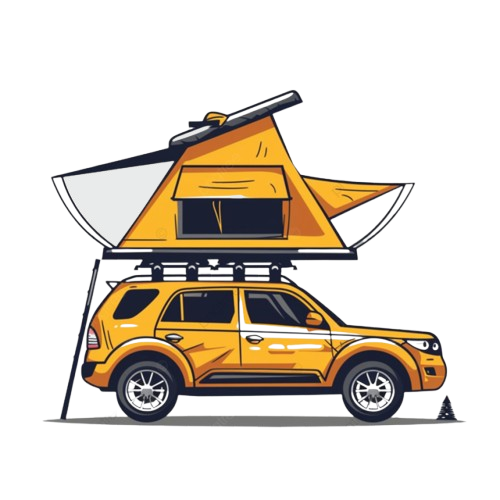
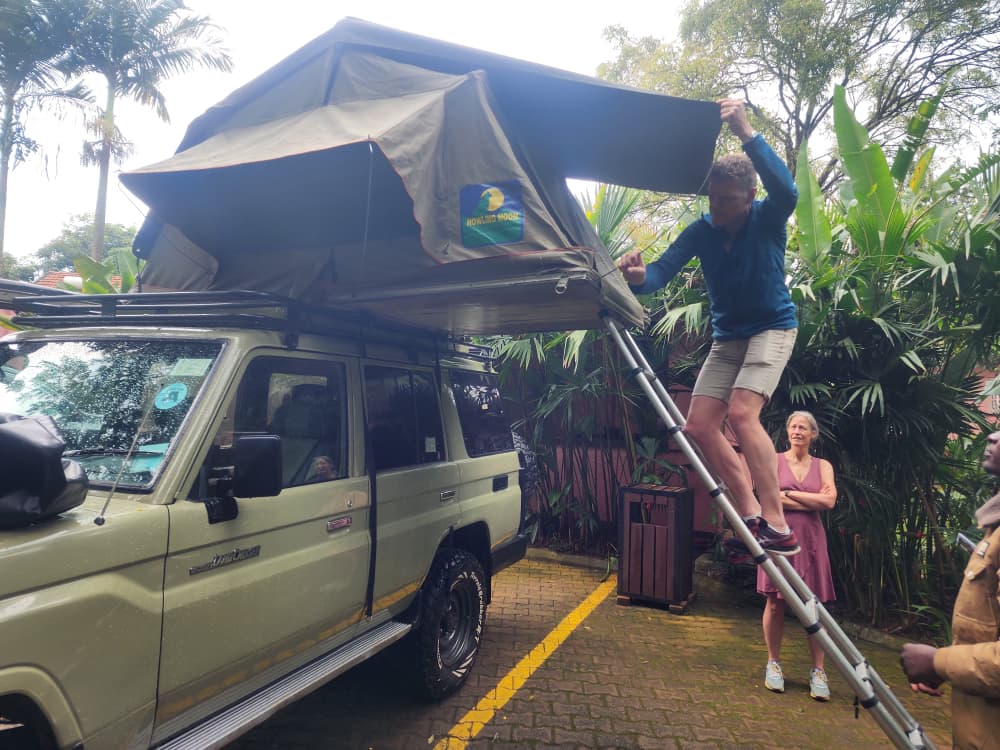
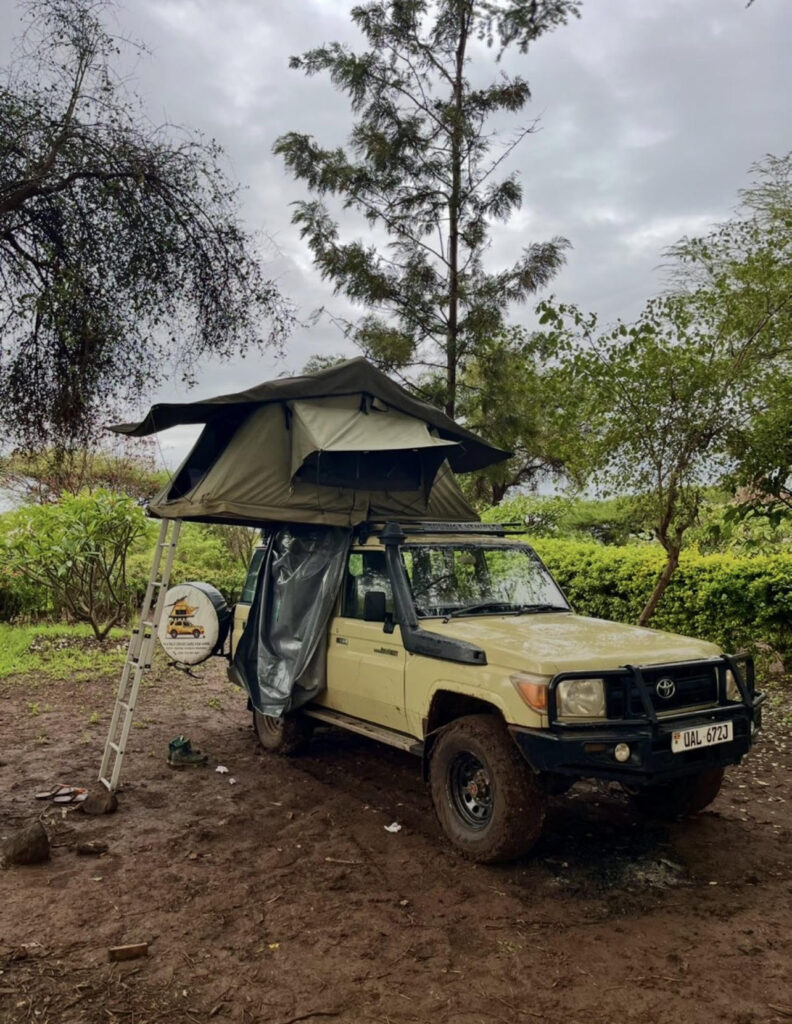
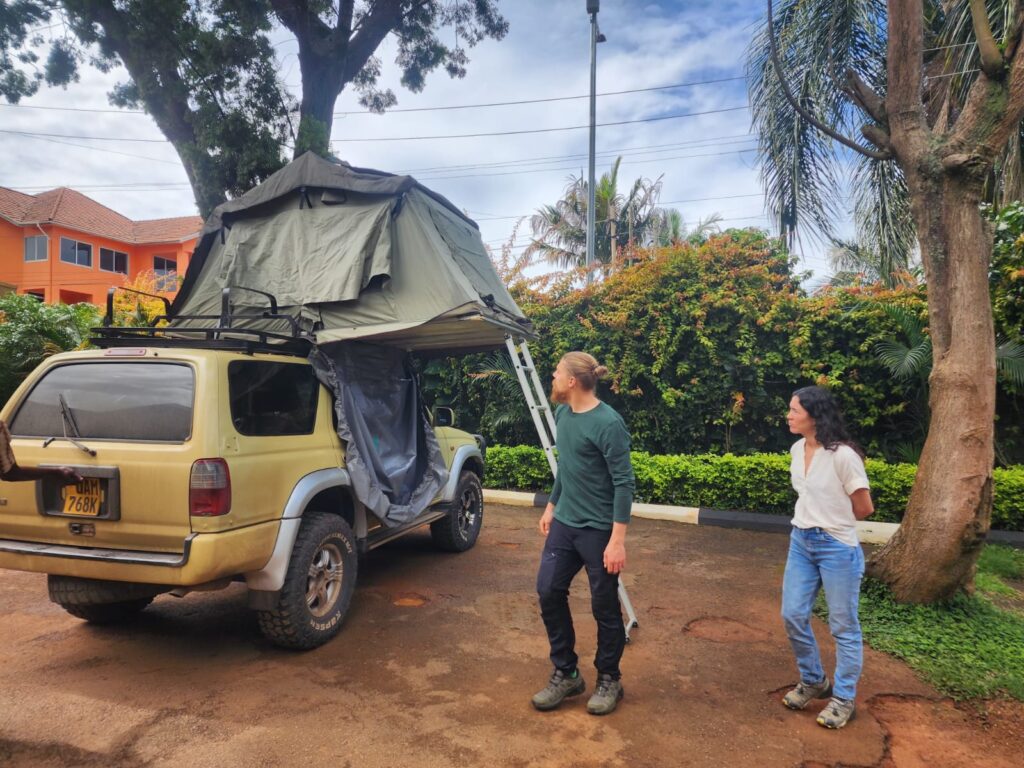
When planning a Rooftop tent safari in East Africa, understanding how rooftop tents work is essential before choosing your vehicle setup. A rooftop tent (RTT) is a fold-out sleeping unit mounted directly on the roof rack of a 4×4 vehicle. Most quality models open in under five minutes, come with a built-in foam mattress, good ventilation with mosquito-proof mesh, and sit elevated 1.5 to 2 metres above the ground, placing you above ground-level wildlife, insects, and morning dampness. When you hire a 4×4 with a rooftop tent in Uganda, Kenya, Tanzania, or Rwanda, the tent travels with you as part of the vehicle. Your accommodation is always exactly where your adventure takes you: no check-in required. The rooftop tent turns your 4×4 into a mobile basecamp, making every park your backyard and every campsite your private suite.
At a Glance: Rooftop Tent vs Safari Lodge
Best for Freedom (Rooftop Tent) 4×4 self-drive camping | Best for Comfort (Safari Lodge) Guided or Independent | ||
Nightly cost | $10–$40 / pitch | Nightly cost | $150–$600+ / person |
Park access | Deep & remote | Park access | Lodge zone only |
Wildlife proximity | Exceptional | Wildlife proximity | Good |
Setup effort | Approx. 5 minutes | Setup effort | None |
Comfort Level | Good | Comfort level | High to luxury |
Bathroom | Shared but varies | Bathroom | Private en-suite |
East Africa self-drive safari — key factors compared
Factor | Rooftop Tent | Safari Lodge |
Flexibility | Move anytime, anywhere | Fixed nightly location |
Budget | Very affordable | Expensive to premium |
Game viewing | Dawn/dusk, your schedule | Set game drive windows |
Rainy season | Manageable with planning | Fully weatherproof |
Solo/couples | Ideal | Good, but costly |
Young families | Great for kids (8yrs and above) | Easiest option |
Night sky | Unmatched | Limited by light & walls |
Self-sufficiency | Full kitchen & gear on board | Dependent on lodge staff |
Summary: For budget-conscious travellers, wildlife enthusiasts, and anyone who values freedom over convenience, a 4×4 rooftop tent hire in East Africa delivers more of what the continent is actually about. However, lodges win on comfort and ease, making perfect sense for specific trips. Many experienced self-drive travellers combine both.
The Real Pros of a Rooftop Tent Safari
1. You Follow the Animals, Not the Booking Calendar
This is the single greatest advantage of rooftop camping on a self-drive safari. Wildlife in places like Queen Elizabeth National Park, the Masai Mara, and the Serengeti doesn’t keep a schedule, and neither should you. With a rooftop tent, if lionesses are hunting at 5:30 AM, you’re already in position, camped inside the park the night before.
Lodge guests, by contrast, are typically limited to scheduled game drives of two to three hours in the morning and afternoon, and must return for meals and check-out times. On a self-drive safari with a rooftop tent, the whole day is yours.
2. The Cost Difference Is Substantial
- Rooftop Tent Campsite – $10–$40 per pitch per night
- Safari Lodge – $150–$600+ per person per night
Luxury lodges in prime zones such as Central Serengeti, the Ngorongoro Crater, the Mara River, Ishasha, and Rwanda’s gorilla corridors regularly exceed $600 per person per night. Meanwhile, Ultra-luxury properties in some concessions push well beyond $1,000. Even mid-range lodges with en-suite bathrooms and buffet meals typically run $150 to $400 per person.
On the other hand, a rooftop tent campsite pitch at most established campsites in Uganda, Kenya, Tanzania, and Rwanda runs between $10 to $40 per night for the whole vehicle. Add park entry fees (a must pay for both lodge guests and campers), and the maths still heavily favours camping. Couples and small groups planning a Rooftop tent safari in East Africa commonly save $2,000 to $4,000 compared to an equivalent lodge-based trip.Couples and small groups on a 10-to-14-day itinerary commonly save $2,000 to $4,000 compared to an equivalent lodge-based trip.
The Real Pros of a Rooftop Tent Safari
1. You Follow the Animals, Not the Booking Calendar
This is the single greatest advantage of rooftop camping on a self-drive safari. Wildlife in places like Queen Elizabeth National Park, the Masai Mara, and the Serengeti doesn’t keep a schedule, and neither should you. With a rooftop tent, if lionesses are hunting at 5:30 AM, you’re already in position, camped inside the park the night before.
Lodge guests, by contrast, are typically limited to scheduled game drives of two to three hours in the morning and afternoon, and must return for meals and check-out times. On a self-drive safari with a rooftop tent, the whole day is yours.
2. The Cost Difference Is Substantial
- Rooftop Tent Campsite – $10–$40 per pitch per night
- Safari Lodge – $150–$600+ per person per night
Luxury lodges in prime zones such as Central Serengeti, the Ngorongoro Crater, the Mara River, Ishasha, and Rwanda’s gorilla corridors regularly exceed $600 per person per night. Meanwhile, Ultra-luxury properties in some concessions push well beyond $1,000. Even mid-range lodges with en-suite bathrooms and buffet meals typically run $150 to $400 per person.
On the other hand, a rooftop tent campsite pitch at most established campsites in Uganda, Kenya, Tanzania, and Rwanda runs between $10 to $40 per night for the whole vehicle. Add park entry fees (a must pay for both lodge guests and campers), and the maths still heavily favours camping. Couples and small groups planning a Rooftop tent safari in East Africa commonly save $2,000 to $4,000 compared to an equivalent lodge-based trip of 10-to-14-days.
3. A Chance to Get Deeper into the Parks
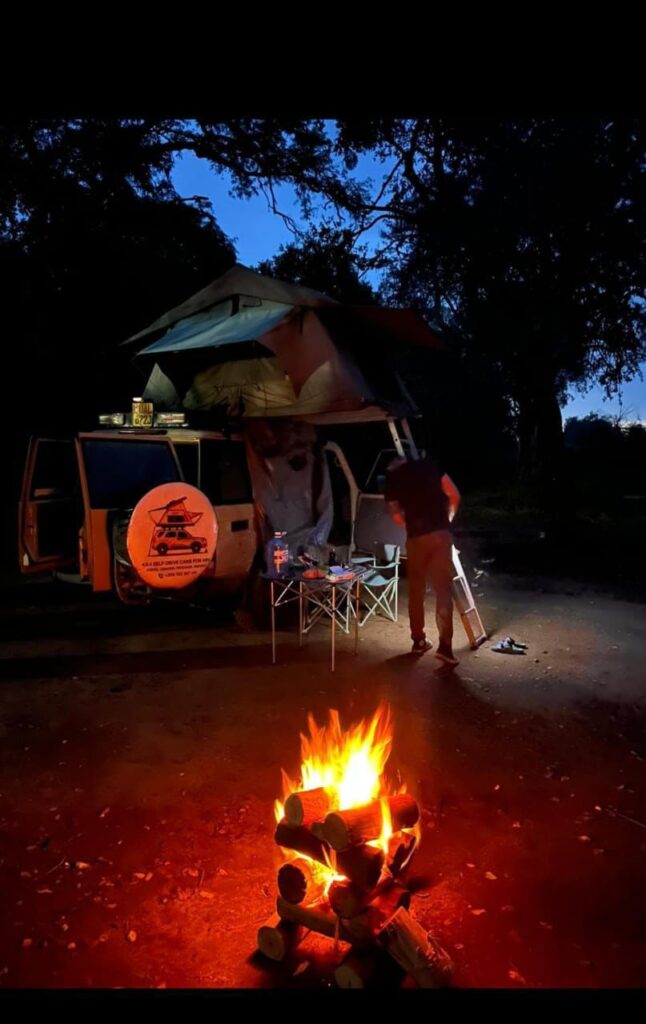
Many of East Africa’s most extraordinary wildlife zones have few or no lodges. The remote sectors in Kidepo Valley in Uganda, the western and southern Serengeti, Tsavo’s vast interior, and the more isolated corners of Lake Manyara are areas where a camper with their own vehicle can access, featuring special campsites that are simply not on the lodge map. Numerous public, community, and bush campsites exist throughout these regions, and they put you where the animals are, not where the lodge was easiest to build.
4. Elevation Means Safety and Comfort
Sleeping two metres above the ground in the middle of a national park is one of the defining highlights of a Rooftop tent safari in East Africa and an experience no lodge can truly replicate. Unlike ground tents, rooftop tents keep you elevated above the terrain, above curious hyenas, ground insects, reptiles, uneven soil, and morning mud. The design is specifically suited to environments where wildlife moves freely through campsites at night. Most modern rooftop tents used on East African self-drive safaris are built for rugged conditions: weatherproof outer shells, mesh ventilation, secure ladder systems, and high-density mattresses. Travellers who have camped in both ground tents and rooftop tents almost universally prefer the latter for comfort and peace of mind.
5. The Bush Experience Is Simply Irreplaceable
Sleeping two metres above the ground in the middle of a national park is an experience that no lodge, however well-positioned, can replicate. You immerse yourself in the night in full, even feeling the temperature shift before sunrise. You enjoy uninterrupted views of the Milky Way in the darkness that only exists far from any settlement. The sounds of hippos in a nearby channel, or a distant lion at 2 AM, become part of the night rather than something heard through a closed window. Many travellers who complete a self-drive rooftop tent safari across East Africa consistently describe it as the defining highlight of their African experience, not just one element of it.
The Real Cons of a Rooftop Tent
Honesty matters. A rooftop tent is not the right choice for every traveller or every trip. Understanding the trade-offs before you depart makes the difference between a trip that exceeds expectations and one that falls short.
1. Set up is a Daily Routine
After a long day of driving and game viewing, climbing a ladder and preparing camp is part of the experience, but it is a routine. Quality rooftop tents open in under five minutes, but some travellers find the daily pack-up and set-up tedious after a week or two. Others find it a ritual they come to love. Know which type you are before you book.
2. Shared Ablution Facilities at Most Campsites
Public and community campsites across East Africa use shared bathrooms and shower blocks. The quality of these facilities often varies considerably, from clean, well-maintained facilities at established park campsites to more basic setups in remote areas. Many private and special campsites within park concessions often include dedicated facilities, but come at a higher nightly rate. If a private en-suite bathroom is a non-negotiable, standard lodge accommodation will serve you better.
Pro Tip: Special campsites, particularly those booked through the Uganda Wildlife Authority (UWA), Kenya Wildlife Service (KWS), and Tanzania National Parks(TANAPA), offer exclusive pitches with better facilities and far fewer fellow campers. They cost more than public sites but retain all the freedom and immersion of self-drive camping.
3. Weather Requires Planning
East Africa’s long rains (typically March to May across Kenya and Tanzania, and peaking slightly differently in Uganda and Rwanda) can make rooftop tent camping less comfortable. A well-designed RTT is fully waterproof, but extended rain combined with humid conditions and muddy tracks can alter the self-drive experience. Lodge guests are insulated from these conditions entirely. The good news: a well-timed itinerary and honest advice from your vehicle hire provider go a long way.
4. There’s A Lot of DIY (Do it yourself)
Cooking, navigation, camp setup, and vehicle checks, among other things – on a self-drive rooftop tent safari, all sit with you. For the right traveller, full ownership of the adventure is precisely the appeal. For travellers who prefer every detail managed, however, a lodge-based itinerary with a driver-guide is the better fit.
5. Younger Children Add Complexity
Rooftop tents are excellent for families with children aged eight and older, and recent years have seen growing numbers of families choosing this style of travel across East Africa. For younger children and toddlers, the ladder and elevated sleeping position add a layer of complexity. Nonetheless, lodge accommodation, with ground-level rooms and dedicated family facilities, remains the easier option for parents of very young children.
When Staying in a Lodge Still Makes More Sense
A lodge beats a rooftop tent in various clear scenarios.
- Gorilla trekking itineraries centred on Bwindi or Volcanoes National Park, where lodges are the primary accommodation near permit departure points.
- Honeymoon and celebration trips where luxury, privacy, and pampering are the purpose of the journey
- Travellers with physical limitations that make ladder access or camp setup impractical
- Short trips of 3-to-4 days where the investment in cooking, camp setup, and self-sufficiency doesn’t fully pay off
- First-time Africa travellers who prefer a guided, managed introduction to the continent before going fully independent
However, there’s no universal answer. The best safari accommodation is always the one that matches the traveller.
The Most Suitable Approach: Most Experienced Travellers Do Both
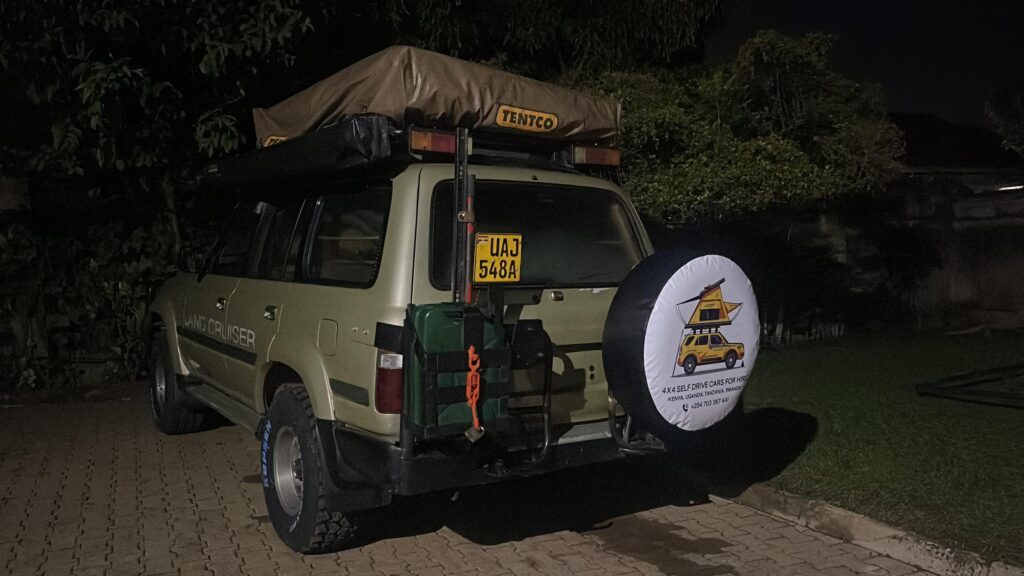
Many seasoned East Africa travellers combine rooftop camping with one or two lodge nights strategically placed mid-itinerary, for a hot shower, a sit-down meal, to relax in a more serene environment, and fresh laundry. The majority of nights are spent in the 4×4 rooftop tent, parked inside parks or at remote bush campsites, with a lodge serving as a mid-trip reset point. This approach works exceptionally well on longer itineraries of ten days or more, and it balances the freedom and access of self-drive camping with the occasional comfort of a proper bed and restaurant meal.
What to Look for in a 4×4 Rooftop Tent Hire Package
Choosing the right vehicle setup is one of the most important parts of planning a successful Rooftop tent safari in East Africa. A well-equipped hire package should include:
Rooftop Tent Hire Checklist
- A capable 4×4 — Toyota Land Cruiser 70, 76, or 79 series, Land Cruiser VX, or equivalent with genuine off-road capability, high clearance, and low-range 4WD
- A quality rooftop tent with a proper foam or high-density mattress — not a foam camping roll
- A rated roof rack built for the tent load and occupancy
- A 12V fridge or cooler — essential for food safety in East Africa’s climate
- Basic cooking equipment: gas stove, pots, utensils, washing-up gear
- Camp furniture: table and chairs for evenings outside the vehicle
- At least one full-size spare tyre — two for remote routes — and a complete toolkit
- Cross-border clearance documentation if travelling between Kenya, Uganda, Tanzania, and Rwanda
- Emergency contacts, GPS maps, and a pre-departure vehicle briefing from your hire provider
Our Thoughts
A Rooftop tent safari in East Africa beats a lodge on access, cost, flexibility, and raw immersion for travellers who value freedom and adventure. It places you inside the East African landscape rather than above it, and it gives you the freedom to move exactly where the wildlife and the moment take you. There’s no reception desk between you and the dawn, and no checkout time to watch while a leopard works its way through the canopy above camp. However, a lodge offers genuine comfort, attentive service, and a reliable buffer against the elements. For specific trips, specific travellers, and specific moments on a longer itinerary, it’s exactly right.
The ideal self-drive safari in East Africa? A well-maintained 4×4, a solid rooftop tent, a route that takes you deep into Uganda, Kenya, Tanzania, or Rwanda, and the confidence to sleep somewhere remarkable every single night.
Ready to Plan Your Rooftop Tent Safari in East Africa Adventure?
Explore our fully equipped fleet of 4×4s with rooftop tents, available for hire in Nairobi, Kampala, Arusha, and Kigali. Expert support included.