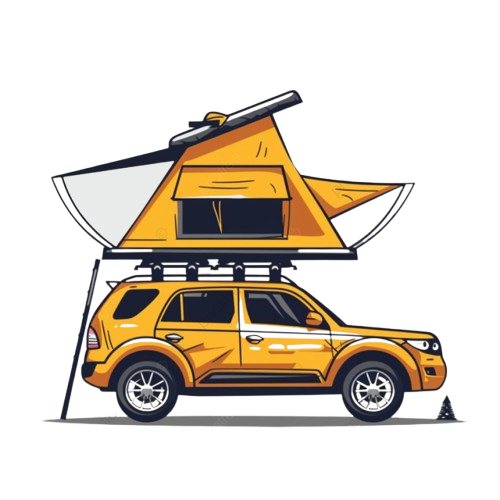
Can you actually drive yourself to the Serengeti and Ngorongoro? Many travellers do, and it is among the most rewarding self-drives in East Africa. It is also the hardest of the northern Tanzania circuit: long distances that look short on a map, a crater road that needs a proper 4×4 with low range, and fuel gaps once you are out on the plains. If you are comfortable on gravel, can drive a manual, and can plan fuel and daylight (night driving is prohibited under our 2026 Terms), it is realistic. If not, the 7 Seater 78 Series comes with a driver and guide at $230 per day. Read on, then confirm the current rules with the park authorities before you commit. For the wider picture see our 4×4 self drive cars for hire in Tanzania.
The route at a glance
| Leg | Approx. distance | Realistic time at the wheel | Surface |
|---|---|---|---|
| Arusha to Karatu | roughly 130 km (80 miles) | 2.5 to 3 hours | Tarmac |
| Karatu to Ngorongoro rim | roughly 30 to 45 km (20 to 28 miles) | 1 hour | Tarmac, climbing |
| Ngorongoro rim to Naabi Hill gate | roughly 80 to 90 km (50 to 56 miles) | 2.5 to 4 hours | Gravel and murram, corrugated |
| Naabi Hill gate to Seronera | roughly 50 to 60 km (31 to 37 miles) | 2 to 3 hours | Park track, mud after rain |
These are planning figures, not survey data.
Mapping apps underestimate murram roads. An app may show the stretch from the Ngorongoro rim to Naabi Hill as well under the time you will need. Corrugations, cattle, herders, wildlife on the road and the 30 to 40 km/h park speed limit in our contract make it much slower. Plan for the slow figure and arrive before sunset.
Arusha as your gateway
Arusha is one of our five pick-up hubs, alongside Nairobi, Mombasa, Kampala and Kigali. Collect in Arusha and you start on tarmac with supermarkets and fuel close by and no border to cross. If you plan to bring a vehicle in from Kenya instead, tell us before booking confirmation, because cross-border travel needs prior written approval, a valid COMESA Yellow Card and cross-border fees. Our Arusha and Nairobi page covers collection options: self drive car hire Arusha and Nairobi.
Do your big shop in Arusha: water, food, cash for small purchases. Ask us about the camping equipment add-ons before you arrive.
Where the tarmac ends
From Arusha through Mto wa Mbu and up to Karatu the road is tarmac, busy with trucks, buses and motorbikes, with speed bumps in every village and police checks. Our contract limits are 80 km/h on highways and 50 km/h in towns, and speeding can void insurance.
Past Karatu the road climbs to the Ngorongoro rim. Beyond the crater highlands the surface becomes gravel and murram towards the Serengeti, and that is where the trip changes character. Tyre pressure, speed and patience matter more than horsepower. Tyres, rims, windscreens and undercarriage damage are excluded from standard insurance (see our terms), so many drivers add the USD 100 Windscreen and Tire Damage Waiver.
The crater descent: why it genuinely needs 4×4 with low range
The road down into Ngorongoro Crater is steep, rutted and slippery after rain. This is not a drive for 2WD, or for a 4×4 left in high range. You want:
- A true 4×4 with low range for the descent, and for the climb out.
- Engine braking in low range, not riding the brakes.
- A driver who has practised engaging 4WD and low range before reaching the rim, not at the top of the descent.
Our Land Cruiser 70-series vehicles are manual 4x4s with low range. Our contract lists improper use of the 4×4 system as an insurance exclusion, so if you have not used low range before, ask for a briefing at hand-over.
Who may enter the crater, how, when, in what vehicle and with what guide is set by the Ngorongoro Conservation Area Authority (NCAA). We state no fees or rules here because they change and sources disagree. Check the NCAA official website before you plan.
Which of our vehicles suits this trip
All eight vehicles can be arranged for Arusha pick-up, subject to a pick-up fee. Prices are per day.
| Vehicle | Price/day | Fit for Serengeti and Ngorongoro |
|---|---|---|
| 5 Seater 78 Series with pop up roof (BEST 4X4) | $160 | Our pick for most couples and families of four. Low range, high clearance, stable on corrugation. |
| 3 Seater 79 Series with roof tent and pop up roof (BEST SELLER) | $180 | Two travellers who want to camp: pop-up roof for game viewing, roof tent for sleeping. |
| 4×4 VX with double roof tent (RECOMMENDED) | $145 | Good value for sleeping on the roof. See double tent VX Land Cruiser. |
| 4×4 Landcruiser VX with roof tent or pop up roof | $130 | Up to 5 including driver. |
| 3 Seater 76 Series with roof tent or pop up roof | $140 | Compact, up to 4 including driver. |
| 7 Seater 78 Series with pop up roof AND DRIVER | $230 | Driver and guide included, up to 8 including driver. For people who want the trip without driving it. |
| 4×4 Safari Van with pop up roof | $120 | Automatic with AC, up to 9 including driver. Check low range and clearance with us for the crater road before choosing. |
| 4×4 Camper Cruiser with roof tent | $100 | Not our recommendation for this route. See 4×4 Camper Cruiser hire. |
All include free camping gear for 2. Be realistic about comfort: our vehicles are older Land Cruisers, the air conditioning in the 78 Series is weak, and they get dusty on murram.
Would 2WD cope? On the Arusha to Karatu tarmac, yes. In the crater and on the plains we would not recommend it, and we do not offer a 2WD hire for this route.
Fuel: the gaps that catch people out
- Fill up in Arusha, and again in Karatu, the last reliable fuel town before the Ngorongoro rim.
- Beyond Karatu, fuel is scarce and can run out. Do not count on a station inside the conservation area or deep in the Serengeti.
- Ask us about extra fuel tanks and long-range options on our Land Cruisers if you plan a loop on the plains.
- Our contract: vehicle supplied with about a quarter tank, returned at the same level; buy fuel only from Shell, TotalEnergies, Rubis or equivalent recognized stations. Wrong or contaminated fuel is the hirer’s liability.
- Rule of thumb: Karatu to Seronera and back to the rim is well over 300 km (190 miles) of slow driving before any game drives.
Gates and park authorities
- Ngorongoro Conservation Area: NCAA. Official site.
- Serengeti National Park, including Naabi Hill gate: TANAPA. Official site.
We quote no entry, crater, vehicle or camping fees and no ranger rules. Check the authorities for current fees, how to pay, and what applies to self-drive vehicles. Naabi Hill is where you register for Serengeti entry; keep passports, licences and vehicle paperwork to hand.
Where to sleep
- Public campsites run by the authorities, with basic facilities. They suit the roof-tent vehicles.
- Special campsites are private and more remote, and need advance booking through the authorities or operators.
- Lodges in Karatu, on the Ngorongoro rim and in the central Serengeti. Book early for peak migration months.
Does a rooftop tent work here? Yes. Sleeping off the ground helps, and it suits this route. Our camping equipment list shows what comes with a camping hire. Follow park rules on where you may camp, keep food secured, and arrive in daylight: night driving is prohibited.
Seasonality: what the roads do
- Dry season (roughly June to October): firm surfaces, dust, the best self-drive window, and the busiest.
- Short rains (roughly November to December): afternoon showers; black-cotton soil on the plains turns sticky.
- Long rains (roughly March to May): the hardest months. Murram becomes slick mud, rivers rise, some tracks close, and our contract prohibits driving through water deeper than 30 cm. Many travellers choose a driver then.
- January to February: often drier again.
Rains vary year to year. Ask us and the park authorities about current road conditions before you leave Arusha.
The migration, month by month
The herds follow the rain, so timing varies. Treat this as a guide, not a promise of sightings.
| Month | Where the herds are likely to be |
|---|---|
| January to March | Southern Serengeti and Ndutu plains; calving usually late January to February |
| April to May | Herds move north and west through the central and western areas; wettest roads |
| June to July | Western corridor and Grumeti area |
| July to September | Northern Serengeti and the Mara River |
| October to November | Herds start moving back south |
| December | Heading toward the southern plains as short rains begin |
If the Mara River is the goal, the north is far from Naabi Hill. Plan for days, not hours.
Distances that look short on a map and are not
Ngorongoro to the Serengeti looks like a short hop. Add corrugation, park speeds of 30 to 40 km/h, wildlife and photo stops, and 80 km can take over three hours. Seronera to the northern Serengeti can swallow a whole day. Build in a buffer for punctures and wet-season detours, and be at your campsite before sunset.
The honest bit: what goes wrong and what to do about it
- Punctures and tyre damage on rough tracks are the most common problem. Check the spare, jack and tools at hand-over and carry water.
- Mud in the wet season. Slow down if the vehicle starts to slide. Do not push through standing water.
- Dust and heat. The 78 Series have weak air conditioning and get dusty.
- Patchy mobile signal in the conservation area and plains. Tell us your route before you go.
- Breakdown. Call us immediately and do not authorize repairs without contacting us. We make reasonable efforts to repair or provide a replacement vehicle where operationally feasible; response depends on location, access and availability.
- Accident. Notify us immediately, notify police within 24 hours, photograph everything and do not admit liability.
- Wildlife. Keep windows up near big cats and elephants and give animals room.
- Insurance. Hirer excess is up to USD 1,000, and tyres, rims, windscreens and undercarriage are excluded. See our terms.
- Deposit. USD 1,000 or EUR 950, paid before collection. Cash is preferred, because card fees on a $1,000 deposit are heavy and international transfers are slow. Card or Pesapal is possible on request, with the fees on the customer. The refund starts after inspection and takes 6 to 14 working days.
Driver requirements: minimum age 23, a valid licence, and at least 2 years of driving experience. Only drivers named in the rental agreement may drive.
Suggested itinerary shapes
- Short loop: Arusha, Karatu, Ngorongoro Crater, Naabi Hill, Seronera and back. See our 5-day self-drive Tanzania Ngorongoro Tarangire itinerary.
- Longer trip: combine Tanzania with Kenya or Uganda. See self drive East Africa and the self-drive camping safari guide.
FAQ
1. Can I self drive in the Serengeti and Ngorongoro Crater?
Many travellers do in a hired 4×4. Rules for vehicles and guides in each area are set by TANAPA and NCAA, so confirm the current position with them before you book.
2. Do I need 4×4 with low range for Ngorongoro Crater?
Yes. The descent and ascent roads are steep and slippery when wet, so we recommend a true 4×4 with low range.
3. How far is Arusha from the Serengeti by road?
It is a long day. Allow roughly 7 to 9 hours at the wheel to reach the central Serengeti, and plan an overnight on the way. These are planning estimates.
4. Where is the last reliable fuel before the Serengeti?
Karatu, as far as we know. Fill up there and ask us about extra fuel capacity for loops on the plains.
5. Which vehicle should I hire?
The 5 Seater 78 Series ($160 per day) for most travellers, the 3 Seater 79 Series ($180) for two campers, or the 7 Seater 78 Series with driver ($230) if you would rather not drive.
6. Can I drive at night?
No. Night driving between sunset and sunrise is prohibited without prior written approval, and unauthorized night driving voids insurance.
7. Can I take a rental from Kenya into Tanzania?
Cross-border hire is allowed across Kenya, Tanzania, Uganda and Rwanda, but needs prior written approval, a valid COMESA Yellow Card and cross-border fees. Tell us before booking confirmation.
8. Where do I find park fees?
From TANAPA for the Serengeti and the NCAA for Ngorongoro. We do not list them.