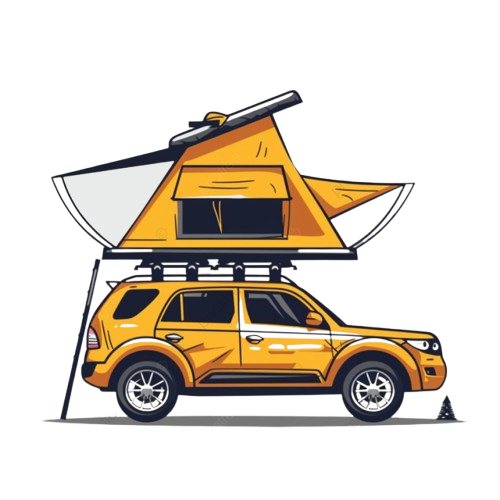
The short answer: Yes. You can drive yourself through Kenya, Tanzania, Uganda or Rwanda and sleep in a rooftop tent without ever having camped in a game park. Camping gear for two comes with every vehicle. Pick-up and drop-off is offered at airports and hotels in Nairobi, Mombasa, Arusha, Kampala and Kigali (a pick-up / drop-off fee is charged), and reviewers describe a thorough handover and a WhatsApp group with the owner, a mechanic and a contact person during the trip.
- Rooftop-tent vehicles run from $100 to $180 per day in US dollars, with camping gear for two included.
- 5.0 on TripAdvisor (22 reviews) and 4.7 on Google (21 reviews). Reviewers keep mentioning the briefing, the mechanic and the WhatsApp group. Read what customers say
- Cross-border hire between Kenya, Tanzania, Uganda and Rwanda with our prior written approval, a valid COMESA Yellow Card and cross-border fees. Every vehicle carries comprehensive insurance, with a hirer excess of up to USD 1,000.
Chat on WhatsApp | Request a free quote
On this page: Is it right for you? – What if something goes wrong? – Which vehicles – The tent – First night – Gear – Cooking and cold food – Campsites – Wildlife – Seasons – Cost – Roads – Booking – FAQ
Is it right for you?
A self-drive camping safari suits you if you:
– meet our driver rules: at least 23 years old, a valid driving license carried at all times while you drive, at least two years of driving experience, and your name on the Rental Agreement (only named drivers may drive);
– like driving and are happy to navigate with an offline map and road signs;
– have camped before, even only at a campground at home, and can live with basic toilets and cold showers for a few nights;
– have at least a week, because setting up and packing the tent every day is worth it over 7-14 nights and a nuisance over 3;
– want to choose your own pace and stay where the animals are, rather than follow a lodge’s game-drive schedule.
Book a lodge, or hire a driver-guide, if you:
– have only 3-4 days;
– are mostly going for gorilla trekking in Bwindi or Volcanoes National Park, where lodges are the easier base;
– have limited mobility, since the tent is reached by ladder;
– want someone else to find the animals. We offer a professional driver/guide as an add-on, and the 7 Seater 78 Series ($230 per day) comes with a driver/guide included.
Comparing the two in detail? Read whether a rooftop tent beats a lodge. Most experienced travelers mix both, with tent nights for the parks and a lodge night or two in the middle.
What if something goes wrong?
This is the real question behind every self-drive safari, and it is the one most guides skip. You are in a foreign country, there may be no signal, and the nearest garage may be hours away. The honest answer is not “nothing will go wrong”. It is “here is what you do, and what we can and cannot promise”.
How our support works, what reviewers describe and where its limits are is set out once, in what happens if the car breaks down. The camping-specific part is below.
1. Learn the camping kit at handover. Reviewers describe a briefing, an inventory checklist and, on request, a hands-on demonstration of setting up and folding the rooftop tent. Tick every item of camping gear against the checklist. Camping equipment that is lost, stolen or damaged is charged at full replacement value, and it is not covered by either insurance product.
2. In the bush, message first, then move. Mobile coverage is patchy inside many parks. WhatsApp holds your message and sends it when you get signal, so write it first and walk to higher ground or the park gate to send. Download offline maps before you leave your hotel. Reviewers describe a WhatsApp group created at the start of the trip with the owner, a mechanic and a contact person.
3. What to send when something breaks:
1. A location pin (WhatsApp > attach > Location). It needs signal to send, but not data to find your position.
2. A photo of the problem: the tire, the dashboard, the leak, the broken zip.
3. A 10-second video if it is a noise or a vibration.
4. One line on what happened just before it started.
4. What our terms say, and what they do not promise. Tell us immediately about a breakdown, a warning light or a mechanical concern, and do not have repairs done without our authorization. In a genuine emergency a nearby mechanic may help, but contact us before any repair begins. Where a genuine breakdown was not caused by negligence or misuse, we make reasonable efforts to arrange repairs or, where operationally feasible, to provide a replacement vehicle. How quickly depends on location, accessibility, border restrictions and vehicle availability, so we cannot promise a repair time or a replacement vehicle in a remote park. Reviewers do describe a mechanic from the company’s network reaching one traveler near Nanyuki, and the team tracking down another traveler on the road to fix minor things. If a confirmed mechanical failure that you did not cause leaves the vehicle unusable for 10 hours or more within a rental day, that day’s rental may be refunded. We are not liable for accommodation, missed activities, transport delays or third-party bookings.
5. The limits that matter for camping. Our vehicles are older Land Cruisers, and customers have said so. For camping that means three things you will notice: the fridge (see below), dust (one reviewer found a 78 Series dusty, with air conditioning that did not work well) and an open rooftop tent that pins the car (see the tent section). The other points customers raise are on the reviews page. We would rather you read them before you book than discover them on day three.
Prefer not to carry the risk at all? Read our insurance and refund policy for what is covered, then ask us about a driver/guide.
Which vehicles carry a rooftop tent
Every vehicle includes free camping gear for two. Five models are listed with a roof tent, some as a choice of roof tent or pop-up roof: the 4×4 Camper Cruiser, the 4×4 Land Cruiser VX, the 3 Seater 76 Series, the 4×4 VX with double roof tent (marked RECOMMENDED on our site) and the 3 Seater 79 Series (marked BEST SELLER). Their daily rates run from $100 to $180. The 4×4 Safari Van, the 5 Seater 78 Series and the 7 Seater 78 Series with driver are listed with a pop-up roof instead.
All eight vehicles can be collected at all five of our locations (Nairobi, Mombasa, Arusha, Kampala and Kigali), and a pick-up / drop-off fee is charged.
Prices, seats, gearbox and roof setup for all eight vehicles are in one table: see the vehicle table.
Three things Americans and Europeans ask first:
– “Can I drive a manual?” Most of the camping fleet (the 76, 78, 79 and VX) is manual. The Camper Cruiser and Safari Van are automatic. If you only drive automatics, say so when you ask for a quote.
– “Which side do I drive on?” Kenya, Tanzania and Uganda drive on the left. Rwanda drives on the right, so if your route crosses into Rwanda you change sides at the border.
– “What do I need to legally drive?” Our terms require every driver to be at least 23 years old, hold a valid driving license (carried at all times while driving) and have at least two years of driving experience. Only drivers named in the Rental Agreement may drive.
The rooftop tent in plain English
If you have camped at home, you already know most of this. A rooftop tent (the same thing as our “roof tent”) is a folding tent fixed to the roof rack of the vehicle. You climb a ladder up to a foam mattress, with the canvas above the cab. Your sleeping bags stay inside it.
What is better than a ground tent:
– No ground to level, no pegs, and no mud or wet grass under your bedding.
– You sleep off the ground, which helps with damp and with small crawling things.
– Setup is a handful of steps instead of a pole puzzle in fading light.
What is worse, and rarely said:
– The tent lives on the car, so the car is pinned while the tent is open. If you stay three nights at one campsite and want to do a game drive each morning, you fold the tent down before you drive and set it up again when you return. Plan a base camp around that.
– You climb down the ladder for the toilet, in the dark, every time.
– Wind and rain are louder, and a wet tent has to dry before you fold it.
– It sleeps two. Gear is included for two people only; extra equipment can be requested at a fee.
How setup works, in six steps (the full guide is in how to set up and pack away a rooftop tent):
1. Park on the flattest ground you can find, handbrake on, in gear.
2. Take off the travel cover and release the straps.
3. Open or unfold the tent and lock any supports.
4. Extend the ladder and check it is firm.
5. Put the bedding in and set up the light.
6. Close the zips behind you, every time.
We set it up with you at handover. Then do it once yourself while the handover team is still there.
Your first night: a realistic run-sheet
The equator sets your schedule. Kenya, northern Tanzania and Uganda sit on or near the equator, so day length barely changes. Sunset falls between roughly 6 and 7:15 p.m. all year, and it is dark within about half an hour. There are no long summer evenings. Park gate hours differ by authority, so check the opening and closing times at the official source before you plan an arrival. If you cross into Rwanda, your watch goes back one hour.
| Time | What happens |
|---|---|
| 3:30-4:30 p.m. | Arrive at the campsite, with daylight to spare. Choose a flat pitch, not under a fruiting tree and not on an obvious animal path. |
| 4:30 p.m. | Set up the tent. Allow 30 minutes the first time; later it takes less. |
| 5:15 p.m. | Start dinner on the gas burner, a few meters from the vehicle. |
| 6:15 p.m. | Eat. Wash up. All food, scraps and cooking gear go into the vehicle, locked. |
| 6:45 p.m. | Dark. Toilet trip now, head torch on, before you settle in. |
| 7:30 p.m. | Bed. Expect noise: hyenas, hippos, birds and distant lions are normal. |
| 5:45-6:30 a.m. | First light. Coffee on the burner, fold the tent, be at the gate when it opens. |
What’s in the vehicle, and what to bring
The camping gear for two comes with every vehicle at no extra charge. This is the list as published on our camping equipment page:
- Sleeping: rooftop tent, sleeping bags, camping light.
- Camp: camping chairs and camping table.
- Cooking: portable stove or gas cooker (gas bottle and burner), cooking pots and pans, cooking utensils (spatula, ladle, tongs), plates, bowls and cutlery, cups, cutting board and knife.
- Cold and clean: car fridge, dishwashing bucket and jerrycan, towels.
- Optional: a camper awning and pillows.
If you are more than two people, you can request extra camping equipment at a fee.
Loss, theft or damage to camping equipment is charged at full replacement value, and the equipment is excluded from both insurance products, so lock the kit in the vehicle when you leave camp. Smoking is not allowed in the vehicle or the tents; cleaning charges and deposit deductions can apply.
Bring from home:
– A warm layer and a hat. In highland areas such as the rim of Ngorongoro Crater (above 2,000 m, or 6,500 ft), nights can drop into the single digits Celsius (40s F), especially from June to August.
– A head torch. The camping light is for the table, not for walking.
– Earplugs, insect repellent, sunscreen, and a power bank.
– A card that works abroad. How park gates take payment differs by authority and changes, so check each authority’s own payment instructions before you travel.
– Cash for the security deposit, which is paid before you collect the vehicle. Cash is the preferred method; the cost section explains why and how it works.
– An offline map app and a local SIM or eSIM.
Not sure what is missing? The full East Africa camping checklist splits it into “in the vehicle”, “bring from home” and “buy in town”.
Cooking and cold food: the honest version
Cooking. Plan on the gas burner. Never cook inside the tent or inside the vehicle cab. Cook and wash up before dark, then lock everything with a smell in the vehicle. Open fires and firewood are regulated differently by each park and campsite, so treat a campfire as something to ask about, not something to count on.
The fridge. One reviewer found the car fridge did not cool well and that it switched off when the engine was turned off; another described theirs as ice-cold. Treat it as a cool box, not a freezer. Buy ice in towns, start with frozen items on day one, and eat the fresh food first. Plan the later days around food that does not need cold, such as pasta, rice, tinned fish, eggs, hard cheese, long-life milk and fruit with skin. Full guide and a three-day menu: cooking and cold food on a self-drive camping safari.
Where you can camp
There are three kinds of campsite, and the one you choose changes your price, your privacy and how far ahead you must plan.
| Type | What it is | What to expect | Booking |
|---|---|---|---|
| Public campsite | Run by the park authority, open to everyone | Basic toilets, sometimes cold showers and water, unfenced, shared with tour-operator groups | Rules differ by authority and season |
| Special campsite | Exclusive-use, secluded site | Quiet, often no facilities at all, higher fee | Booked in advance |
| Private campsite outside the gates | Run by an owner or community next to a park | Often cheaper, flexible, sometimes with showers | Directly with the site |
Who runs what: Kenya’s national parks are run by the Kenya Wildlife Service (KWS). The Maasai Mara National Reserve is run by the Narok County Government, not KWS. Tanzania’s national parks are run by TANAPA, with Ngorongoro run separately by its own conservation authority. Uganda’s are run by the Uganda Wildlife Authority (UWA). Rwanda’s Akagera National Park is managed by African Parks with the Rwanda Development Board. Each publishes its own fee schedule and has its own booking system and payment rules, so use its official website for any number.
Two things that surprise first-timers:
1. Fees are set by each park authority and they change. For many parks, entry is charged per person and camping is charged per person per night on top, but the structure, the rates and the payment methods differ by authority and are revised from time to time. Read the authority’s current schedule before you budget. We do not print fee figures here, because the only numbers that count are the official ones.
2. Check how long your entry is valid. Validity periods differ by authority, and some differ between a day visit and an overnight stay. Confirm the rule at the official source before you plan an afternoon arrival, a night and a morning game drive.
We help with park entry booking as part of the rental, including gorilla and chimpanzee permits. Extra deposits may apply for permits and accommodation bookings. The full comparison is in park campsites in Kenya, Tanzania, Uganda and Rwanda.
Sleeping near wildlife: the rules that matter
A rooftop tent is a canvas tent on a vehicle roof. It is not armor: a leopard can climb, and a hyena will investigate anything that smells of food. What the tent does is lift you off the ground and push you into a small set of habits. The habits are what keep a night uneventful:
- Food never goes in the tent. After you eat, food, scraps, cooking gear and anything scented go into the vehicle, locked. This one rule prevents most night visits.
- Zip it closed. Every zip, every time you climb in.
- Toilet before dark. Use the campsite toilet while there is light. Keep a lidded bottle for the night rather than climbing down.
- Stay up there. If you hear a large animal close to the vehicle, stay in the tent, stay quiet, and do not shine a torch in its face or climb down to look.
- Never feed anything. Baboons and vervet monkeys will take food from the table and open doors, so lock the cab when you leave it.
- Choose your pitch. Avoid fruiting trees, water edges and obvious animal tracks. Hippos graze on land at night near rivers and lakes.
- Know who is near. Save the park headquarters number. In the morning, tell the WhatsApp group if the vehicle was touched or damaged.
More detail, by animal: wildlife safety in a rooftop tent.
Rainy or dry season?
| Region | Wetter months | Drier months | What changes for campers |
|---|---|---|---|
| Kenya and northern Tanzania (Mara, Serengeti, Amboseli, Nakuru) | Long rains roughly March to May; shorter rains roughly October to December | Roughly June to October, and January to February | Wet season: mud on the open plains and some tracks closed. Dry season: dust, cooler highland nights, more campers. |
| Uganda | Roughly March to May and September to November | Roughly December to February, and June to August | Wet: slippery tracks, fewer visitors, lush scenery. Dry: easier roads. |
| Rwanda | Roughly March to May, with shorter rains around October to November | Roughly June to August, and December to February | Cool, wet highlands; pack for rain even in the dry months. |
For a first camping trip, the drier months are easier: firmer roads, less mud, drier canvas. The Great Migration is typically in the Maasai Mara from July to October, which is also when its campsites are busiest, so book early.
Full month-by-month guidance: rainy vs dry season camping in East Africa.
What it costs, and who you pay
| Cost line | Who you pay | How it is charged |
|---|---|---|
| Vehicle (with camping gear for two) | Us | Per day at the published rate. See the vehicle table. |
| Booking deposit | Us | 25% confirms a reservation; 40% where itinerary planning is included. The balance is due 30 days before departure, or 14 days for late bookings. |
| Pick-up / drop-off | Us | A fee is charged; the amount depends on the location. |
| Cross-border travel | Us | Needs prior written approval, a valid COMESA Yellow Card and the applicable cross-border fees. |
| Security deposit | Us | USD 1,000 or EUR 950, paid before collection. Cash is preferred; card is possible on request, with the card fees on you. Why, and when it comes back, are in the paragraph below the table. |
| Insurance | Us | Comprehensive cover is included, with a hirer excess of up to USD 1,000. Optional: the tire and windshield damage waiver (WTDW, USD 100) and Full Insurance Cover (USD 500 per rental period), both non-refundable. |
| Optional camping extras | Us | Camper awning, pillows, and extra camping gear for more than two people, at a fee. |
| Fuel | Fuel stations | The vehicle is supplied with about a quarter tank and must come back at the same level. Unused fuel is not refunded. Buy fuel only at Shell, TotalEnergies, Rubis or an equivalent recognized station. |
| Park entry and campsites | The park authority or site owner | Set by the authority or the site owner. See the official schedule. |
| Food, water and ice | Shops | Daily |
Security deposit in brief. The security deposit is USD 1,000 or EUR 950, paid before you collect the vehicle. Cash is preferred. A card payment (through Pesapal) is possible on request, and the card fees are yours. We prefer cash for a practical reason: card fees are heavy on a USD 1,000 deposit, and an international bank transfer is slow and costly to reverse. The refund starts after the vehicle inspection and the mechanical assessment (6 to 14 working days), and then depends on your own bank. There is no on-the-spot refund at drop-off.
Insurance in brief. Standard cover is comprehensive: third-party bodily injury, death and property damage, plus accident, theft, fire, vandalism, natural disasters and animal-related incidents. The hirer’s excess is up to USD 1,000. Tires, rims, windshields, undercarriage, clutch, suspension and water damage are excluded and are the hirer’s liability, as is damage caused by the wrong fuel, unauthorized drivers, unauthorized night driving or border crossings, and negligent or reckless driving. Camping equipment is not insured. Overspeeding can void cover. Read the full wording in the insurance and refund policy and the terms and conditions.
A worked example, vehicle only: two adults, 10 rental days, the 4×4 VX with double roof tent at $145 per day is $1,450, before the pick-up / drop-off fee, any optional extras, fuel and the refundable security deposit. Park entry and camping fees are separate. For many parks they are charged per person, so they grow with your group: look up each park on its authority’s official schedule and add the totals to your budget. The park campsites guide will link to those schedules.
Roads, distances and driving days
Planning rule: on mixed roads in East Africa, plan for an average of 40-50 km/h (25-31 mph), and for no more than 200-250 km (125-155 mi) in a day. Tarmac is quick between towns. The last stretch into most parks is not, and unpaved sections can take twice as long as the same distance on tarmac. Our terms set 30-40 km/h (19-25 mph) as the speed limit inside national parks, so game drives are slow by design.
Approximate road distances and drive times, one way (an excerpt of the table in the routes guide; the figures must match it):
| Leg | Distance (approx.) | Time (approx.) |
|---|---|---|
| Nairobi to Lake Nakuru National Park | about 160 km (100 mi) | 3 to 4.5 hours |
| Nairobi to the Maasai Mara (Sekenani gate) | about 235 to 270 km (146 to 168 mi) | 5 to 7 hours, more in the rains |
| Arusha to Seronera, Serengeti | about 315 to 330 km (196 to 205 mi) | 8 to 10 hours, best split over two days |
| Kampala to Murchison Falls National Park (Paraa area) | about 300 to 305 km (186 to 190 mi) | 5 to 7 hours |
| Kigali to Akagera National Park | about 110 to 135 km (68 to 84 mi) | 2.5 to 3 hours |
The driving rules in our terms:
– Speed limits: 80 km/h (50 mph) on highways, 50 km/h (31 mph) in towns, 30-40 km/h (19-25 mph) inside national parks. Overspeeding can void your insurance, bring penalties and lead to deductions from your security deposit.
– No night driving. Driving between sunset and sunrise is prohibited unless we have given prior written approval, and unauthorized night driving voids your cover. Plan to be in camp by mid-afternoon.
– No deep water. Driving through water deeper than 30 cm (about 12 in) is prohibited, and water damage is excluded from insurance.
– No dunes or salt pans. Sand dunes, salt pans and restricted off-road terrain are prohibited unless we have expressly authorized them.
– Check the vehicle. Monitor engine oil, coolant, tire pressure and the dashboard warning lights, and report a warning light promptly.
What catches first-timers: speed bumps in towns, motorbikes and minibuses stopping without warning, livestock and pedestrians on the road, and potholes after rain. Do not drive after dark; it is the single easiest way to turn a good trip into a bad one, and our terms prohibit it. Low-range four-wheel drive is for mud and rough ground; ask us to show you how it works at handover.
Itineraries that already use these legs: the 14-day East Africa self-drive safari, the 5-day Tanzania safari to Ngorongoro and Tarangire and the 12-day Uganda safari.
How to book
- Tell us the route. Send dates, group size, where you land, and the parks you want. If you plan to cross a border, say so before the booking is confirmed: cross-border travel needs our prior written approval.
- Choose the vehicle. Every vehicle can be collected at any of our five locations, and a pick-up / drop-off fee is charged. We confirm availability for your dates.
- Pay the deposit. A 25% deposit confirms the reservation (40% where itinerary planning is included). The balance is due 30 days before departure, or 14 days for late bookings. The security deposit of USD 1,000 or EUR 950 is paid before collection. Cash is preferred, and a card payment is possible on request (card fees are yours).
- We help with park entry. Assistance with park entry booking is part of what we offer, including gorilla and chimpanzee permits. Permit outcomes depend on the issuing authority.
- Handover. Pick-up and drop-off is offered at airports and hotels in Nairobi, Mombasa, Arusha, Kampala and Kigali. Reviewers describe deliveries to hotels, Airbnbs, Nairobi airport, Lake Nakuru and Diani Beach, and a WhatsApp group that opens at the start of the trip. You tick off the inventory.
Cancelling. All cancellations must be made in writing. Refunds step down as the trip approaches: 98% at 60 or more days before, 75% at 30-59 days, 50% at 15-29 days and none at 14 days or less. Gorilla and chimpanzee permits follow Uganda Wildlife Authority policy. There are no refunds for early returns, unused rental days or unused fuel, and we strongly advise travel and cancellation insurance. Our terms are governed by the laws of Uganda. Full terms: car hire terms and conditions.
One customer drove one way from Entebbe through Rwanda to Arusha over 21 days, crossing two borders. Another hired for 26 days across Kenya and northern Tanzania.
Chat on WhatsApp | Request a free quote | Email: info@4x4selfdrivecarsforhire.com | WhatsApp: +254 703 367441
FAQ
Do I need camping experience to use a rooftop tent on safari?
No. You do not need camping experience. At handover we set up the rooftop tent with you, so you have seen it done before you try it alone. The first setup takes the longest, and after a night or two it becomes routine. If you have camped before, you will find it easier still.
What camping gear comes with the vehicle?
Every vehicle includes free camping gear for two people: a rooftop tent, sleeping bags, camping chairs and a table, a camping light, a gas burner and bottle, pots, pans, utensils, plates, cups, a car fridge, a dishwashing bucket and towels. Pillows and a camper awning are available as optional extras. For more than two people, extra gear can be requested at a fee. Lost, stolen or damaged camping equipment is charged at full replacement value.
Is it safe to sleep in a rooftop tent in a game park?
Animals do walk through unfenced campsites at night, and a few habits keep a visit uneventful: no food in the tent, zips closed, toilet before dark, and stay up there if you hear a large animal. A rooftop tent is a canvas tent, not armor, so the habits matter more than the height. Details are in the wildlife safety section above.
What happens if the vehicle breaks down while I’m camping?
Send the WhatsApp group a location pin and a photo, and tell us immediately; do not arrange repairs without our authorization. Under our terms we make reasonable efforts to arrange a repair or, where operationally feasible, a replacement vehicle. Response times depend on location, accessibility, border restrictions and vehicle availability, so we cannot promise a repair time in a remote park, and we say so before you book. If a confirmed mechanical failure that you did not cause leaves the vehicle unusable for 10 hours or more within a rental day, that day’s rental may be refunded. One reviewer describes a mechanic from the company’s network reaching them near Nanyuki.
How much does a rooftop tent 4×4 cost per day?
Vehicles with a roof tent run from $100 to $180 per day in US dollars: Camper Cruiser $100, Land Cruiser VX $130, 3 Seater 76 Series $140, VX with double roof tent $145, and 3 Seater 79 Series $180. Camping gear for two is included. Park entry, campsite fees, fuel, food, the pick-up / drop-off fee and any optional extras are additional.
Can I take the camping vehicle across borders?
Yes, between Kenya, Tanzania, Uganda and Rwanda, with conditions. Cross-border travel needs our prior written approval, a valid COMESA Yellow Card and payment of the applicable cross-border fees, so tell us your route before the booking is confirmed. An unauthorized crossing ends the rental, voids your insurance and forfeits your security deposit. Read the insurance and refund policy for exactly what is covered.
Will the fridge keep my food cold overnight?
Not reliably. One reviewer found the car fridge did not cool well and that it switched off when the engine was turned off; another described theirs as ice-cold. Treat it as a cool box: buy ice, start with frozen items, eat fresh food first, and plan later days around food that keeps without refrigeration.
Do you hire camper trailers?
No, our camping vehicles carry a rooftop tent on the roof of a Land Cruiser rather than towing a trailer. If you need more sleeping space than the two-person gear covers, ask us about extra camping equipment.
Frequently asked questions
The 8 questions and answers sit inside the page body above, under the H2 “FAQ”. They are customer-question themes (rooftop tent, safari rooftop tent, cost, camper trailers, the fridge, safety and cross-border), not Search Console query evidence. Conversational fragments such as “how much does it cost to rent one” are not keyword demand the page can win. The questions are also the source for the FAQPage markup in section 7.